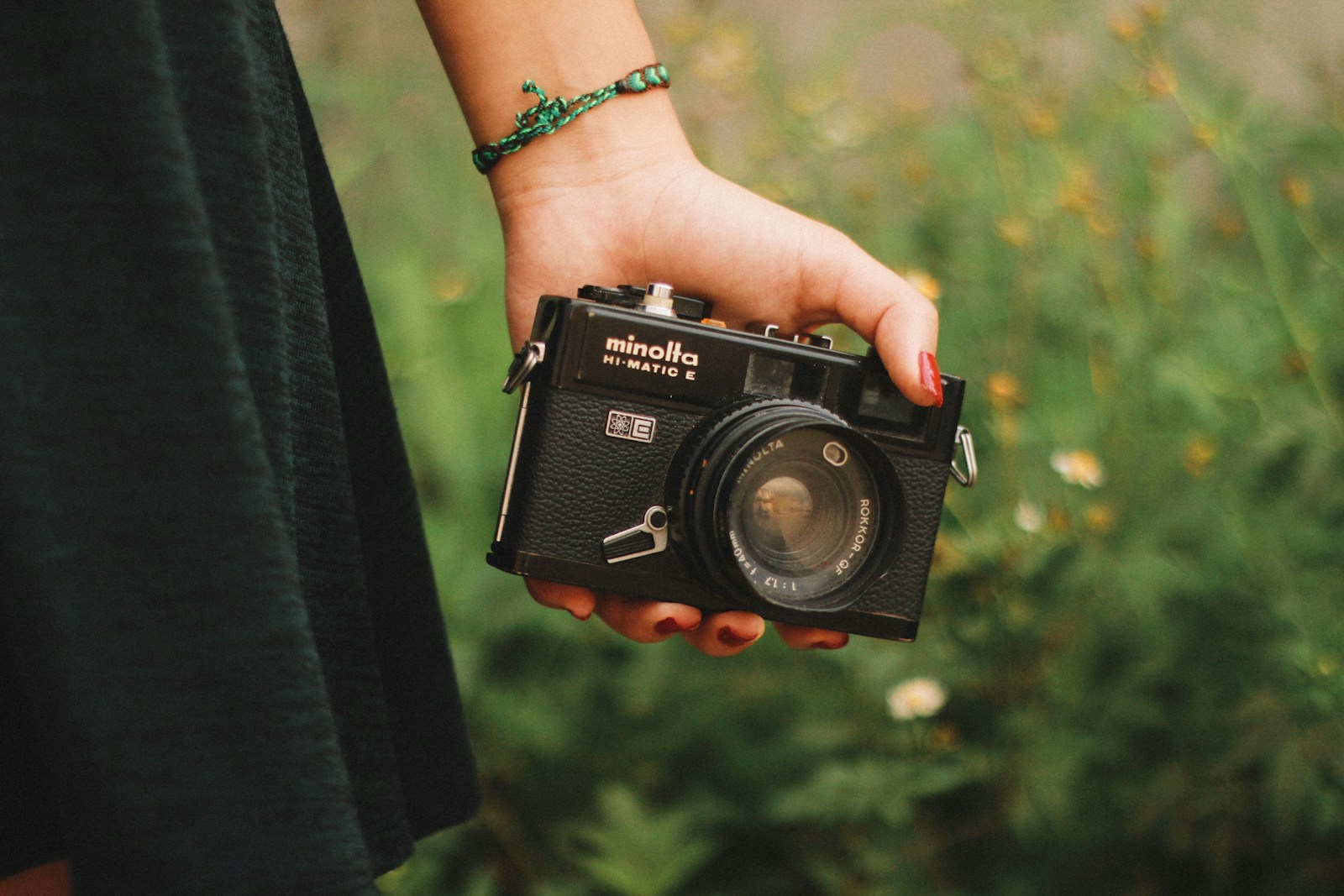
Best Point-and-Shoot Cameras for Film-Like JPEGs
Quick answer
The best point-and-shoot camera for most people in 2026 is the Ricoh GR IV: an APS-C sensor, a 28mm-equivalent f/2.8 lens and 5-axis stabilization in a 262g body that fits a jeans pocket, listed at $1,599.95 on Ricoh's US store. Pick the Fujifilm X100VI if you want 40MP and a viewfinder, the Ricoh GR IIIx for 40mm, and the Sony RX100 VII if you need zoom.
The point-and-shoot category has split in two. At the bottom, cheap compacts have been wiped out by phones. At the top, a handful of large-sensor compacts survive because they do something a phone cannot: one fixed focal length, real depth of field, and JPEGs you can tune to a film look and never touch again.
This guide covers the four cameras worth your money if that second group is what you want. Every spec and price below comes from Ricoh's, Fujifilm's and DPReview's own pages, read on September 26, 2026. We shoot Ricoh GR cameras daily and build recipes for them; we have not shot the Sony, so its section stays factual.
The short list
| Camera | Sensor | Lens (35mm equiv.) | Stabilization | Weight | Price |
|---|---|---|---|---|---|
| Ricoh GR IV | 25.74MP APS-C, back-illuminated | 28mm f/2.8 | 5-axis, up to 6 stops | approx. 262g | $1,599.95 |
| Fujifilm X100VI | 40.2MP APS-C X-Trans CMOS 5 HR | 35mm f/2 | 5-axis, 6 stops | approx. 521g | not listed on the spec page |
| Ricoh GR IIIx HDF | 24.24MP APS-C | 40mm f/2.8 | 3-axis, up to 4 stops | approx. 262g | $1,349.95 |
| Sony RX100 VII | 20.1MP 1-inch stacked | zoom, f/2.8–4.5 | yes | approx. 302g | $1,200 at launch |
Prices are Ricoh Imaging Americas listings for the two GR models and DPReview's recorded launch MSRP for the Sony.
Our pick: the Ricoh GR IV, because it is the only camera here that combines an APS-C sensor with a body you actually carry every day rather than one you decide to bring.
Best overall: Ricoh GR IV
The GR IV is the camera we reach for. Ricoh's specification page lists a 25.74MP back-illuminated APS-C sensor, an 18.3mm f/2.8 lens (28mm equivalent) built from seven elements in five groups, and 5-axis sensor-shift stabilization rated up to 6.0 steps on the CIPA 2024 standard. It weighs approximately 262g with battery and card, 228g body only, and carries 53GB of internal memory alongside a microSD slot. The DB-120 battery is rated for about 250 images.
Two of those numbers matter more than the rest. Six stops of stabilization means handholding at shutter speeds that used to need a wall to lean on, which is most of what night street photography asks for. And 53GB of internal memory means you can leave the house with no card and still shoot all day, which sounds like a gimmick until the one time it saves a trip.
DPReview's travel camera guide names it the best pocketable travel camera for the same reason we do: nothing else this small has a sensor this big. Our full Ricoh GR IV review goes deeper on what changed from the GR III and whether existing owners should upgrade.
The trade-offs are real. There is no viewfinder, no weather sealing listed, and 28mm is a demanding focal length that forces you close to your subject. If you already know you dislike wide lenses, buy something else.
Best image quality: Fujifilm X100VI
If sharpness and color straight out of camera are the whole point, the X100VI wins. Fujifilm's specification page lists a 40.2MP X-Trans CMOS 5 HR APS-C sensor, a fixed 23mm f/2 lens (35mm equivalent), 5-axis in-body stabilization rated at 6.0 stops, ISO 125 to 12,800 with extension down to 64 and up to 51,200, and a hybrid viewfinder pairing an optical finder with a 0.5-inch, 3.69 million dot OLED panel. Battery life is quoted at approximately 310 frames using the EVF, 450 using the OVF.
It also ships with 20 Film Simulation modes. That is the honest advantage: you pick Classic Chrome or Acros and you are done.
The cost is size. At approximately 521g and 128.0 x 74.8 x 55.3mm, the X100VI is twice the weight of a GR and does not go in a pocket. It is a small-bag camera. Our GR III vs X100V comparison works through the same trade-off in more detail, and the conclusion has not moved with the newer models.
Our pick for color: the X100VI if you want it handed to you, a Ricoh if you want to build the look yourself and own it.
Best 40mm option: Ricoh GR IIIx
Same body, different lens. Ricoh lists the GR IIIx with a 24.24MP APS-C sensor, a 26.1mm f/2.8 lens giving approximately 40mm equivalent, 3-axis stabilization up to 4 stops, ISO 100 to 102,400, and a weight of approximately 262g with battery and card. The HDF version, listed at $1,349.95, adds a built-in Highlight Diffusion Filter that softens highlights for a gentler, slightly dreamy rendering.
Forty millimeters is the quiet answer for people who find 28mm too aggressive. You keep the pocketability and you compose from a normal distance. If you are torn, our GR III vs GR IIIx breakdown covers how the two focal lengths change the way you shoot.
Best zoom: Sony RX100 VII
DPReview's specification page lists the RX100 VII with a 20.1MP 1-inch stacked CMOS sensor, an f/2.8 to f/4.5 zoom, a 2.36 million dot electronic viewfinder at 0.59x magnification, a weight of 302g with battery, a CIPA rating of 260 shots, and an MSRP of $1,200 at announcement.
The 1-inch sensor is smaller than APS-C, so low-light files will not match the others. What you get instead is reach: a zoom that covers everything from a wide street scene to a distant detail, in a body that still fits a coat pocket. If you travel and hate changing position, that flexibility beats a better sensor you have to walk toward.
Getting film-like JPEGs out of any of them
The reason to buy a large-sensor compact is to stop editing. That means setting up the camera once, properly. On a Ricoh GR, everything lives in Image Control, and these are the parameters that actually change the character of a file:
| Parameter | What it does | Where we usually start |
|---|---|---|
| Highlight contrast | Softens or hardens the top of the tone curve | Lower it for a filmic roll-off |
| Shadow contrast | Controls how quickly shadows block up | Raise it slightly for punch |
| Saturation | Overall color intensity | Below neutral for most film looks |
| Clarity | Local contrast and texture | Low, or negative for softer skin |
| Toning | Color cast across the image | Small shifts only |
| Grain | Adds luminance noise | Light, and only on monochrome |
Save the result to a user mode (U1, U2, U3) and it becomes a one-dial camera. Pair it with snap focus and the GR stops feeling like a camera with menus at all.
On the Fujifilm side, you start from a simulation and adjust around it. On the Sony, expect to do more work in post, because the JPEG engine is not built for this.
Mistakes we see all the time
Buying for specs you will never use. Forty megapixels is wonderful and irrelevant if you post at 2048px. Sensor size and how often the camera is in your pocket matter far more than resolution.
Choosing a zoom because it feels safer. A fixed lens teaches you a focal length. Six months in, you see in 28mm or 40mm before you raise the camera, and you shoot faster than any zoom user.
Leaving the JPEG engine at default and then shooting RAW anyway. If you are going to edit every file, you did not need this camera. Set up a look you trust and let the camera finish the picture.
Ignoring battery reality. None of these cameras get near a phone's endurance. Carry two spares and stop thinking about it.
In short
Buy the Ricoh GR IV if you want the best image quality that fits in a pocket, the Fujifilm X100VI if you want a viewfinder and colors handed to you, the Ricoh GR IIIx if 40mm suits you better than 28mm, and the Sony RX100 VII if zoom range decides it. Whichever GR you land on, our best GR III film recipes transfer straight across the current lineup.
Ready to set yours up? Start with the Classic Chrome recipe ($1.99) for a muted documentary palette, or take the whole shortcut with our Best Sellers Bundle ($16.99).
Frequently asked questions
What is the best point-and-shoot camera in 2026?
For pocket carry with a large sensor, the Ricoh GR IV. It pairs a 25.74MP back-illuminated APS-C sensor with a 28mm-equivalent f/2.8 lens and 5-axis stabilization rated up to 6 stops, in a body that weighs about 262g with battery and card, according to Ricoh Imaging Americas. DPReview's travel camera guide also names it the best pocketable travel camera.
Is a point-and-shoot camera better than a phone?
For image quality, yes, if the sensor is big. The GR IV and X100VI both use APS-C sensors, which are far larger than any phone sensor, so they hold detail in shadows and roll off highlights instead of clipping them. The bigger practical difference is the fixed lens: one focal length makes you compose deliberately instead of pinch-zooming.
Which point-and-shoot camera has the best colors out of camera?
The Fujifilm X100VI ships with 20 Film Simulation modes, so it gives the best colors with zero setup. The Ricoh GR cameras start more neutral but let you adjust saturation, hue, key, highlight and shadow contrast, clarity, toning and grain separately, which means a tuned Ricoh recipe can match or beat a Fuji simulation for a specific look.
How much does a Ricoh GR IV cost?
Ricoh Imaging Americas lists the GR IV at $1,599.95 and the GR IIIx HDF at $1,349.95, as read on September 26, 2026. Prices on compacts have climbed sharply since the used-compact boom, so check the current listing before you buy, and expect earlier GR models to hold their value on the used market.
Do I need a viewfinder on a point-and-shoot camera?
Only if you shoot in bright sun or prefer framing at eye level. The X100VI has a hybrid optical and electronic finder with a 3.69 million dot OLED panel; the Ricoh GR IV and GR IIIx have no finder at all. Shooting from the LCD, or zone focusing without looking, is faster for candid street work once you get used to it.
Sources: us.ricoh-imaging.com · us.ricoh-imaging.com · fujifilm-x.com · dpreview.com · dpreview.com