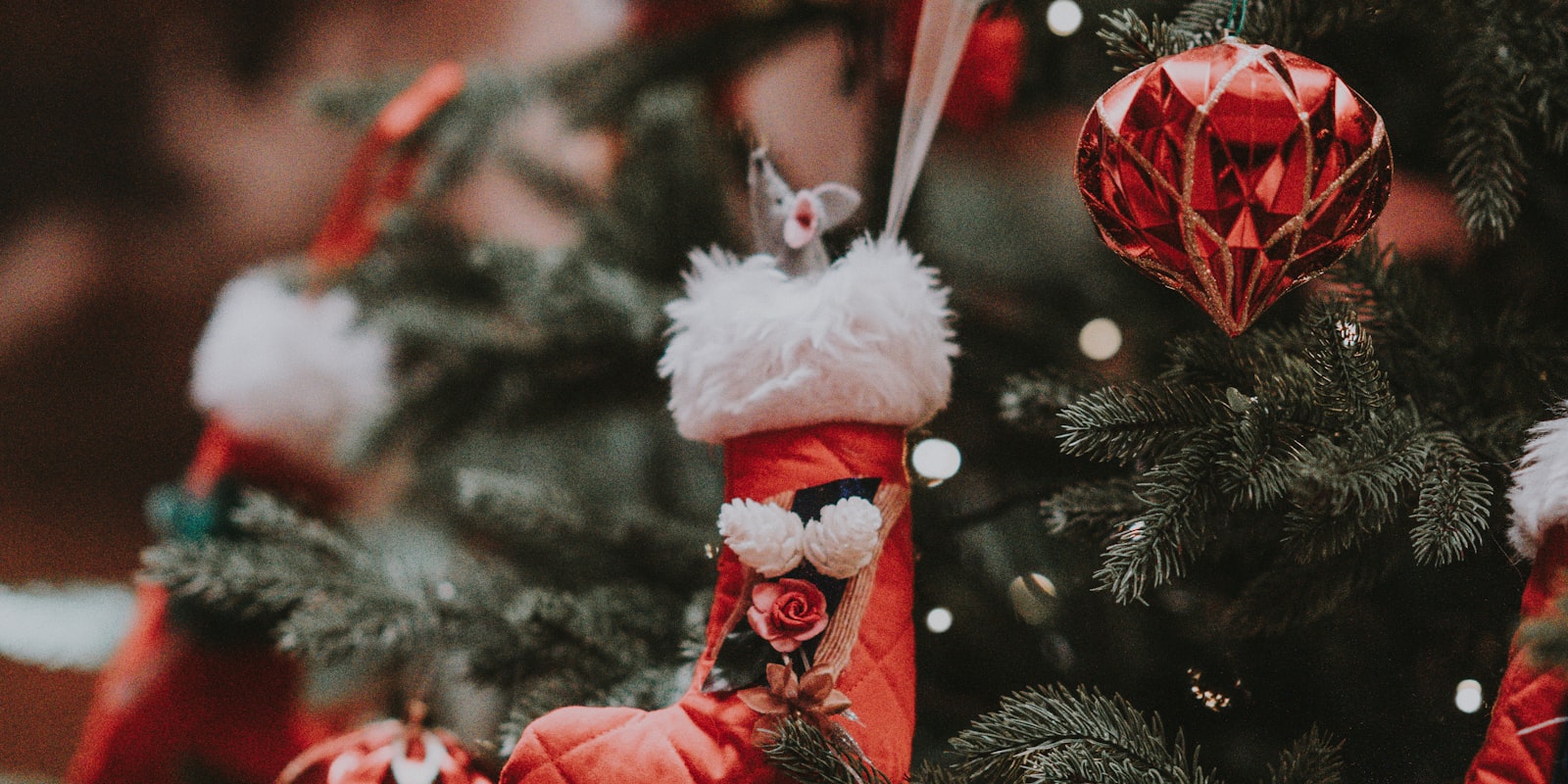
Ricoh GR III Christmas & Holiday Lights Photography: Settings, Recipes, and Tips
Christmas and holiday lights are one of the most photogenic subjects of the year — warm string lights against a cold winter night, frosted shop windows, glittering Christmas trees, and bokeh from distant fairy lights all make for unforgettable images. The Ricoh GR III is perfectly suited to this kind of low-light, atmospheric work: its APS-C sensor handles high ISO with grace, the f/2.8 lens pulls in plenty of light, and its pocket-friendly size lets you shoot freely at holiday markets, family gatherings, and late-evening neighborhood walks without lugging gear.
This guide covers the best Ricoh GR III settings, preset recipes, and composition techniques for capturing Christmas and holiday lights photography that feels warm, cinematic, and authentic.
Why the Ricoh GR III Excels at Holiday Lights Photography
Before diving into specific settings, here's why the GR III is a strong companion for Christmas season shooting:
- Bright f/2.8 lens gathers light efficiently and produces creamy bokeh from out-of-focus fairy lights
- APS-C sensor keeps shadow detail clean even at ISO 3200 and above
- Compact body disappears in a coat pocket — ideal for crowded holiday markets and family events
- Snap Focus modes let you grab candid moments without waiting for autofocus to hunt in dim light
- In-body image stabilization allows handheld shutter speeds as slow as 1/15s for stationary light displays
- Macro mode (6cm minimum distance) captures intimate details of ornaments, wrapping paper, and tabletop decorations
Essential Camera Settings for Christmas & Holiday Lights
Shooting Mode: Aperture Priority (Av)
Holiday scenes mix many light sources — colored bulbs, candles, tungsten storefronts, ambient streetlights. Aperture Priority keeps you in control of depth of field while the camera handles fluctuating exposure across these mixed sources.
Choose your aperture based on the look you want:
- f/2.8 for dreamy bokeh from background fairy lights and shallow-focus ornament close-ups
- f/4 – f/5.6 for portraits in front of a Christmas tree where you want the subject sharp but the lights still soft
- f/5.6 – f/8 for wider scenes of decorated streets, Christmas markets, or full living room interiors
ISO Configuration
Most holiday lights photography happens after sunset, so ISO management is critical:
- Auto ISO 200 – 3200 works for the vast majority of indoor and outdoor holiday scenes. Set the minimum shutter speed to 1/60s to avoid motion blur.
- Fixed ISO 800 – 1600 is a clean baseline for outdoor light displays where you can stabilize against a wall, railing, or street pole.
- ISO 3200 – 6400 for hand-held candle scenes, late-night markets, or interiors lit only by a Christmas tree. The GR III's grain at these ISOs is filmic, not destructive.
For static displays where you can keep the camera still, lower ISO with longer shutter speeds will always give the cleanest result.
Focus Settings for Festive Scenes
Holiday lights confuse most autofocus systems because the camera struggles to lock onto pinpoint light sources. Use these approaches:
Touch AF is the most reliable option. Tap directly on a solid object — an ornament, a face, a wrapped gift — rather than relying on the AF box landing somewhere helpful on its own. The GR III's contrast-detect AF locks faster when it has something concrete to hold.
Snap Focus at 2m is your secret weapon for candid Christmas market shots, kids opening presents, or any scene where you want to react fast. Pre-focus at 2 meters and shoot from the hip — anything in that zone of focus will be sharp.
Manual focus is the gold standard for tree lights, distant fairy lights, and abstract bokeh shots. Engage MF, rack focus until the lights blow out into beautiful circles, and you have full creative control over the bokeh.
Macro mode (flower icon) is essential for detail work — ornaments, ribbon textures, candle flames, the surface of a wrapped present. The 6cm minimum focus distance lets you fill the frame.
White Balance for Holiday Lighting
White balance is where Christmas photography lives or dies. Most modern LED string lights skew either coolly blue-white or warmly amber, and the wrong choice flattens the mood:
- Auto White Balance (AWB) is a safe starting point but often neutralizes the warmth you want to keep
- Tungsten / Incandescent preserves the cool blue tones of frost, snow, and shadow areas while keeping warm lights vivid
- CTE (Color Temperature Enhancement) pushes the warm tones further — great for cozy indoor scenes and golden tree lights
- Manual Kelvin at 3200K is the classic "Christmas movie" balance: warm but not orange, with deep blue shadows
- Manual Kelvin at 4500K balances mixed indoor/outdoor scenes where you have both natural and artificial light
If you can only memorize one setting for holiday photography, set your Kelvin to 3200K and forget it. The resulting blue-and-amber contrast is the visual signature of every Christmas movie ever made.
Best Preset Recipes for Christmas & Holiday Lights
1. Cozy Hearth — Warm Indoor Tree
Optimized for indoor scenes lit by a Christmas tree, fireplace, or candles. This recipe leans into warmth, soft contrast, and gentle highlights to capture the feeling of being home.
- Image Control: Standard
- Saturation: +1
- Hue: +1
- High/Low Key: +1
- Contrast: -1
- Contrast (Highlight): -2
- Contrast (Shadow): +1
- Sharpness: +1
- Shading: 0
- Clarity: +1
- White Balance: Manual Kelvin (3200K)
- ISO: Auto (400 – 3200)
- Aperture: f/2.8 – f/4
The lifted highlights protect string-light bulbs from clipping to pure white, while the +1 shadow contrast keeps the deep tones rich. The slight hue shift adds a touch of red bias that flatters skin tones and warm decor.
2. Cinematic Christmas — Blue Hour Streets
For walking around decorated neighborhoods or holiday markets at twilight, this recipe nails the classic blue-hour-meets-warm-lights cinematic look.
- Image Control: Positive Film
- Saturation: +2
- Hue: 0
- High/Low Key: -1
- Contrast: +2
- Contrast (Highlight): -1
- Contrast (Shadow): -2
- Sharpness: +2
- Shading: +1
- Clarity: +2
- White Balance: Tungsten
- ISO: Auto (800 – 6400)
- Aperture: f/2.8 – f/4
Tungsten white balance pushes ambient sky and snow toward a clean blue while keeping fairy lights amber. The boosted saturation and Positive Film image control add cinematic richness without overcooking colors.
3. Bokeh Dream — Out-of-Focus Lights
Designed for abstract or background-bokeh shots where the lights themselves are the subject. Shoot wide-open and slightly throw focus to render lights as soft circles.
- Image Control: Vivid
- Saturation: +2
- Hue: 0
- High/Low Key: +2
- Contrast: 0
- Contrast (Highlight): -2
- Contrast (Shadow): 0
- Sharpness: 0
- Shading: -1
- Clarity: -1
- White Balance: CTE
- ISO: Auto (400 – 1600)
- Aperture: f/2.8
CTE pushes the warm gold and red tones for that dreamy, almost overexposed glow. Reduced clarity softens the entire image so bokeh circles render smooth and round rather than harsh.
4. Snow & Lights — Outdoor Display
For Christmas light displays, drive-through light shows, and outdoor decorations in snowy environments. Balances accurate color with enough drama to keep the image alive.
- Image Control: Standard
- Saturation: +1
- Hue: 0
- High/Low Key: 0
- Contrast: +1
- Contrast (Highlight): -1
- Contrast (Shadow): +1
- Sharpness: +2
- Shading: +1
- Clarity: +1
- White Balance: Manual Kelvin (3800K)
- ISO: Auto (400 – 3200)
- Aperture: f/4 – f/5.6
3800K Kelvin keeps snow looking white rather than blue while still preserving the warmth of incandescent or warm-white LEDs. The slight shading adds a subtle vignette that draws the eye toward the brightest areas of the display.
Composition Techniques for Holiday Lights
Foreground Bokeh
Shoot through a strand of out-of-focus lights to add a magical foreground element to portraits and scene shots. Hold a small string of fairy lights close to the lens at the edge of the frame and focus on your subject behind them. The result: shimmering colored orbs framing your composition.
The Window Shot
Decorated windows — both yours looking out and shop windows looking in — are some of the most evocative subjects. Get close enough to use the glass reflections as a compositional layer, with lights both inside and outside the frame creating depth.
Low Angle From the Tree Base
Lie on the floor and shoot straight up the trunk of a Christmas tree. The branches converge toward the star or angel topper, with strings of lights radiating outward. It's a perspective most people never photograph and feels fresh every year.
Silhouettes Against Light Walls
Photograph people in front of large light installations or illuminated buildings. Expose for the lights and let your subjects fall into silhouette. The shape of someone holding hot cocoa or scarf-wrapped against a wall of color is timeless holiday imagery.
Detail Macro Shots
Don't ignore the small things. A close-up of a single ornament, the texture of pine needles, the flame of a candle, frost on a wreath, or the gold edge of a wrapped present — these details build a complete visual story of the season.
Walking Through a Holiday Market
For market scenes, get low and shoot up through the lights strung between stalls. The lights become leading lines pulling the eye through the frame, and the angle removes distracting cluttered backgrounds.
Quick Reference Cheat Sheet
| Scenario | Aperture | ISO | WB | Best Recipe |
|---|---|---|---|---|
| Christmas tree indoors | f/2.8 – f/4 | 800 – 3200 | 3200K | Cozy Hearth |
| Holiday market at dusk | f/2.8 – f/4 | 1600 – 6400 | Tungsten | Cinematic Christmas |
| Outdoor light display | f/4 – f/5.6 | 400 – 1600 | 3800K | Snow & Lights |
| Bokeh abstracts | f/2.8 | 400 – 1600 | CTE | Bokeh Dream |
| Ornament close-up | f/2.8 (Macro) | 400 – 1600 | 3200K | Cozy Hearth |
| Decorated street scene | f/4 | 1600 – 3200 | Tungsten | Cinematic Christmas |
| Candle / fireplace | f/2.8 | 800 – 3200 | CTE | Cozy Hearth |
| Snowy yard with lights | f/5.6 | 400 – 1600 | 3800K | Snow & Lights |
Final Tips for Better Christmas Photos
Shoot RAW + JPEG. Holiday lighting is unpredictable — mixed color temperatures, tricky exposure ranges, blown highlights from bare bulbs. RAW gives you headroom to recover; JPEG with your preset gives you the look instantly.
Bring a small support. A Joby tripod, a beanbag, or even resting the camera on a railing transforms what you can shoot. Two-second self-timer + a steady surface = sharp 1/4s exposures of light displays without bumping ISO.
Underexpose by 1/3 to 2/3 stop. Holiday lights almost always meter brighter than they look to your eye. A slight negative exposure compensation preserves the deep, moody blacks that make lights pop.
Wait for snow or rain. Wet pavement reflects every nearby light, doubling the visual impact of any scene. The hour after fresh snow is one of the best windows of the entire year for outdoor lights photography.
Don't forget people. Pure light displays are pretty, but the best Christmas photos almost always include a person — a child pointing, hands holding cocoa, someone unwrapping a gift, a couple standing together under a light arch. Lights set the stage; people give the photo a heartbeat.
Mind your reflections. Glass ornaments, windows, polished surfaces, and even shiny wrapping paper will all bounce your reflection back into the frame. Move two steps left or right and check the corners before pressing the shutter.
Ready to bring home magical Christmas photos this year? Browse our curated preset collections for one-click holiday looks, or grab a complete bundle to cover every festive lighting scenario.
Get a free recipe + 15% off your first order
Our Natural Analog recipe (exact settings for the GR III, GR IIIx and GR IV) and a personal discount code, straight to your inbox.
No spam. Unsubscribe in one click.