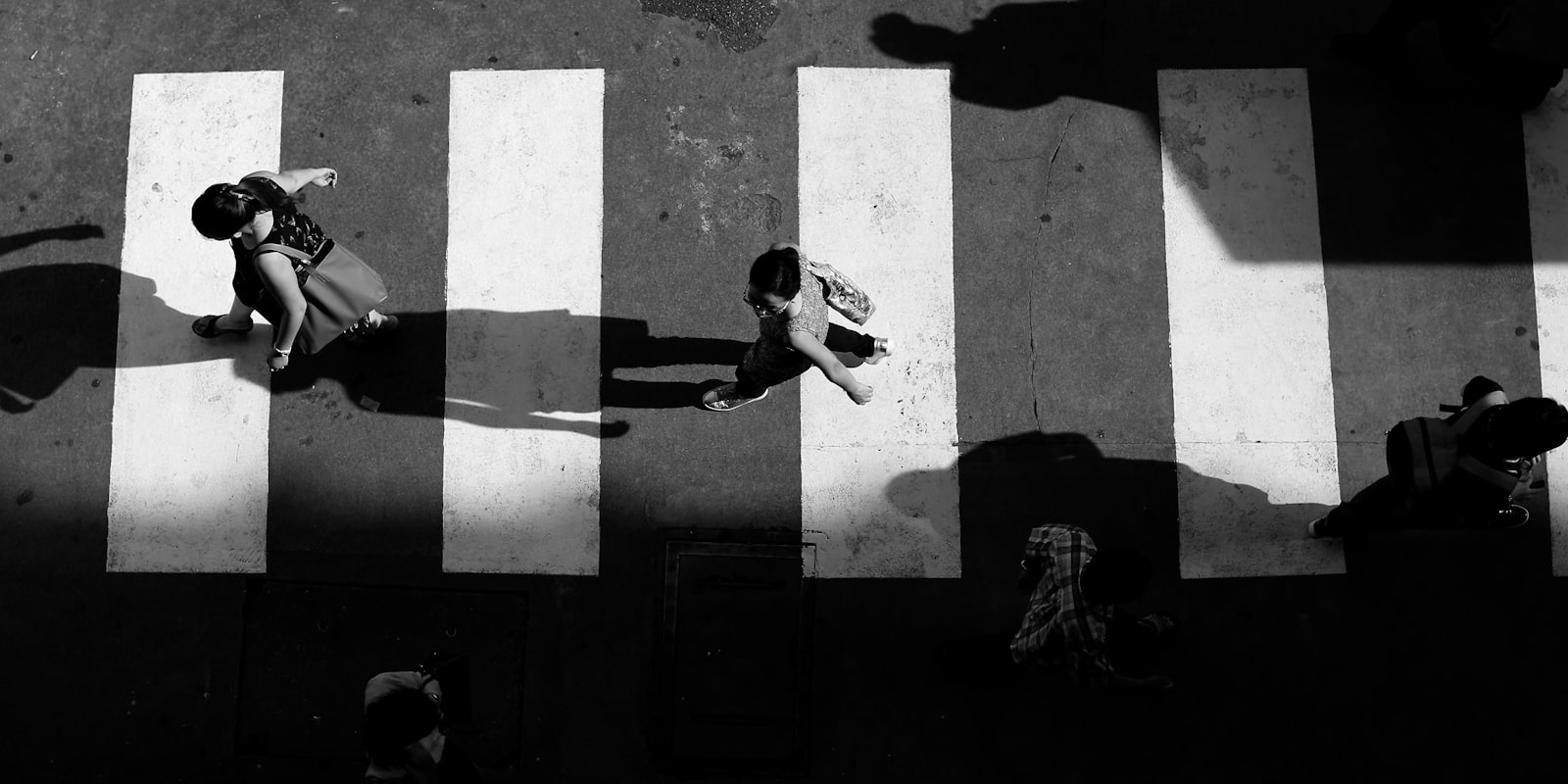
Kodak T-Max 400 Recipe for the Ricoh GR III: The Modern Black & White Film Look
If Kodak Tri-X 400 is the gritty, grainy soul of classic photojournalism, Kodak T-Max 400 is its refined modern counterpart. Built on Kodak's tabular-grain (T-Grain) technology, T-Max 400 delivers the same 400-speed flexibility with dramatically finer grain, higher sharpness, and a smoother, more linear tonal scale. It's the film you reach for when you want black and white that's clean and crisp rather than raw and rough — detailed portraits, architectural lines, fine textures, and street frames that hold up when you look close. The best part? You can get remarkably close to that look in-camera on your Ricoh GR III, no darkroom required.
In this guide we'll dial in a complete Kodak T-Max 400 film recipe for the Ricoh GR III, explain why each setting matters, and cover the light, subjects, and shooting style that make this modern monochrome look truly sing.
What Makes the Kodak T-Max 400 Look
Before touching the menu, it helps to know exactly what you're chasing. T-Max 400 has a signature that's distinctly different from the older, chunkier emulsions:
- Exceptionally fine grain for a 400-speed film — smooth, tight, and unobtrusive
- High sharpness and acutance that renders edges and fine detail with real precision
- A long, smooth tonal scale with gradual, even transitions from black to white
- Clean, neutral mid-tones that hold detail rather than crushing it into contrast
- A modern, almost clinical honesty — less nostalgic grit, more clarity and control
Where Tri-X shouts, T-Max speaks clearly. The GR III's Monochrome Image Control is perfectly suited to this: instead of leaning hard into grain and contrast, we hold contrast moderate, push sharpness and clarity for that high-acutance bite, and keep grain restrained so the fine-grain character comes through.
The Kodak T-Max 400 Recipe for Ricoh GR III
Navigate to MENU > Still Image Settings > Image Control and select Monochrome as your base. Then dial in the following:
- Image Control: Monochrome
- Filter Effect: Off
- Toning: 0 (neutral — T-Max is a true neutral black and white)
- High/Low Key Adjustment: 0
- Contrast: +1
- Contrast (Highlight): 0
- Contrast (Shadow): +1
- Sharpness: +3
- Shading: 0
- Clarity: +2
- Grain Effect: Weak
- White Balance: Auto (white balance has no effect on tone in Monochrome, but Auto keeps your live view neutral)
- ISO: Auto 200–3200
- Exposure Compensation: 0 as a starting point
Save this as one of your User custom modes (U1–U3) so you can recall it instantly.
Why these settings work
Monochrome with neutral toning is the foundation. Like Tri-X, T-Max 400 is a true neutral black and white with no built-in warm or cool cast, so we keep toning at zero for an honest, faithful rendering.
Contrast held at +1 with a gentle shadow lift (+1) is the key difference from a grittier recipe. T-Max is famous for its long, smooth tonal scale — it keeps detail in both highlights and shadows instead of collapsing them into pure black and white. Moderate contrast preserves that full gradient, giving you a controlled, professional look with plenty of mid-tone information to work with.
Sharpness at +3 is where T-Max earns its reputation. This film has some of the highest resolving power and acutance of any 400-speed stock, and pushing sharpness recreates that crisp, detailed edge rendering. Combined with the GR III's already excellent 28mm lens, you get frames that stay sharp right into the corners.
Clarity at +2 adds local mid-tone contrast that emphasizes fine texture — fabric weave, skin, stone, foliage — without the heavy-handed punch of a high-contrast recipe. It reinforces the "you can see every detail" quality T-Max is prized for.
Grain Effect set to Weak is deliberate and important. The whole point of T-Grain film is its fine, tight grain structure. Setting grain to Strong would turn your files into faux-Tri-X; a light touch of grain keeps a hint of film texture while honoring T-Max's smooth, modern character. If you prefer a truly clean digital-film hybrid, you can even turn grain Off entirely.
Neutral exposure compensation (0) suits T-Max's balanced, forgiving latitude. Unlike the moodier, underexposed bias of a pushed Tri-X look, T-Max wants a clean, well-exposed negative that carries detail everywhere.
A Crisp "Fine Art & Landscape" Variation
T-Max 400 is a favorite for large prints and detailed subjects because of its resolution and tonal smoothness. For architecture, landscapes, and fine-art work where you want maximum clarity and a full tonal range, try this variation:
- Image Control: Monochrome
- Filter Effect: Red (dramatically darkens skies and boosts contrast between clouds and sky)
- High/Low Key Adjustment: 0
- Contrast: +1
- Contrast (Highlight): -1
- Contrast (Shadow): +1
- Sharpness: +4
- Clarity: +3
- Grain Effect: Off
- ISO: Auto 200–800
- Exposure Compensation: 0
The Red filter effect deepens blue skies to near-black and makes clouds leap off the frame — a classic black-and-white landscape technique. Maximum sharpness, higher clarity, and no grain deliver a pristine, gallery-ready file that holds up at large print sizes. Keeping ISO low preserves the cleanest possible tonality.
A "Portrait & Skin" Variation
T-Max's smooth gradation flatters faces beautifully. For people, family moments, and quieter portraits, soften the recipe for gentle, natural skin rendering:
- Image Control: Monochrome
- Filter Effect: Yellow (renders skin tones more naturally and evenly)
- High/Low Key Adjustment: +1
- Contrast: 0
- Contrast (Highlight): -1
- Contrast (Shadow): +1
- Sharpness: +2
- Clarity: 0
- Grain Effect: Weak
- ISO: Auto 200–1600
- Exposure Compensation: +0.3
The Yellow filter evens out skin tones, the lifted key and lower contrast keep the look soft and flattering, and dropping clarity to zero avoids exaggerating skin texture. A touch of positive exposure compensation gives the bright, clean, high-key feel that suits gentle portraiture.
T-Max 400 vs. Tri-X 400 on the GR III
These two Kodak 400-speed black-and-white films are the classic head-to-head, and understanding the difference tells you which recipe to reach for:
- Grain: Tri-X has bold, organic, visible grain; T-Max has fine, tight, nearly smooth grain. This is the biggest visual divide.
- Sharpness: T-Max resolves more detail with higher acutance; Tri-X trades some sharpness for character.
- Tonal scale: T-Max is smoother and more linear; Tri-X is punchier with more inherent contrast.
- Mood: Tri-X feels nostalgic, raw, and documentary; T-Max feels modern, clean, and precise.
Think of it this way: shoot the Tri-X recipe when you want grit, energy, and vintage attitude; shoot this T-Max recipe when you want clarity, fine detail, and a controlled, contemporary black and white. Many GR III shooters keep both saved to separate User modes and switch based on the subject and mood. For a British alternative with its own classic mid-grain character, our Ilford HP5 Plus 400 recipe sits nicely between the two.
Best Subjects and Light for the T-Max Look
T-Max's clean, detailed rendering rewards certain subjects more than others. Lean into them:
- Architecture and cityscapes — clean lines, geometric shapes, and fine structural detail come alive with high sharpness and the Red-filter landscape variation.
- Portraits and people — the smooth tonal scale flatters skin and holds subtle detail in faces and fabric.
- Textures and fine detail — foliage, stone, machinery, and intricate patterns benefit from T-Max's resolving power.
- Even and soft light — unlike Tri-X, which loves harsh drama, T-Max shines in gentle, directional, and diffused light where its long tonal scale can render every gradation.
- Landscapes — the fine grain and detail make it a natural for scenic black and white, especially with a Red or Orange filter effect.
Because T-Max holds detail across the whole tonal range, you have more freedom to shoot in flat or complex light than you would with a high-contrast film — just watch for scenes that need a contrast boost and lean on the filter effects to shape them.
Shooting Tips for Authentic Results
Expose carefully and evenly. T-Max rewards a clean, well-exposed frame more than a moody underexposed one. Aim for a balanced exposure that carries detail in both shadows and highlights — that's where the film's smooth tonality really shows.
Keep ISO moderate for the cleanest look. T-Max's fine-grain advantage is most visible at ISO 200–800. Let it climb when you need to, but for detail-critical work — portraits, architecture, prints — stay in the low-to-mid ISO range.
Use the filter effects deliberately. The GR III's Filter Effect setting mimics the colored contrast filters film shooters screwed onto their lenses. Yellow for natural skies and skin, Orange for a stronger sky, Red for dramatic near-black skies and bright clouds. This is one of the most powerful and underused tools for black-and-white work.
Shoot for the print. T-Max was engineered for enlargement and detail. Compose with clean edges and think about how the fine detail will read up close — this film rewards care.
Preview in monochrome, commit to monochrome. Shooting JPEG in this recipe gives you the finished look on the LCD, training your eye to see tonally. If you shoot RAW+JPEG, you keep a color safety net while previewing the T-Max rendering. For more on that workflow, see our black and white photography guide.
Final Thoughts
Kodak T-Max 400 endures because it proves black and white doesn't have to mean grit and grain — it can be clean, sharp, detailed, and endlessly controllable while still feeling unmistakably like film. With the Monochrome Image Control tuned for high sharpness, moderate contrast, and restrained grain, the Ricoh GR III becomes a genuinely convincing T-Max machine, ready in your pocket for detailed street frames, crisp architecture, and flattering portraits alike.
Load this recipe into a User mode, choose your filter effect for the scene, and go shoot as if a fresh roll of T-Max were loaded. You'll find the look — clean, precise, and quietly beautiful — is the perfect modern complement to the grittier classics.
Want more black-and-white inspiration? Pair this with our Kodak Tri-X 400 recipe, Ilford HP5 Plus 400 recipe, Fujifilm Acros 100 recipe, and our black and white photography guide to master the monochrome look on your GR III.
Get a free recipe + 15% off your first order
Our Natural Analog recipe (exact settings for the GR III, GR IIIx and GR IV) and a personal discount code, straight to your inbox.
No spam. Unsubscribe in one click.