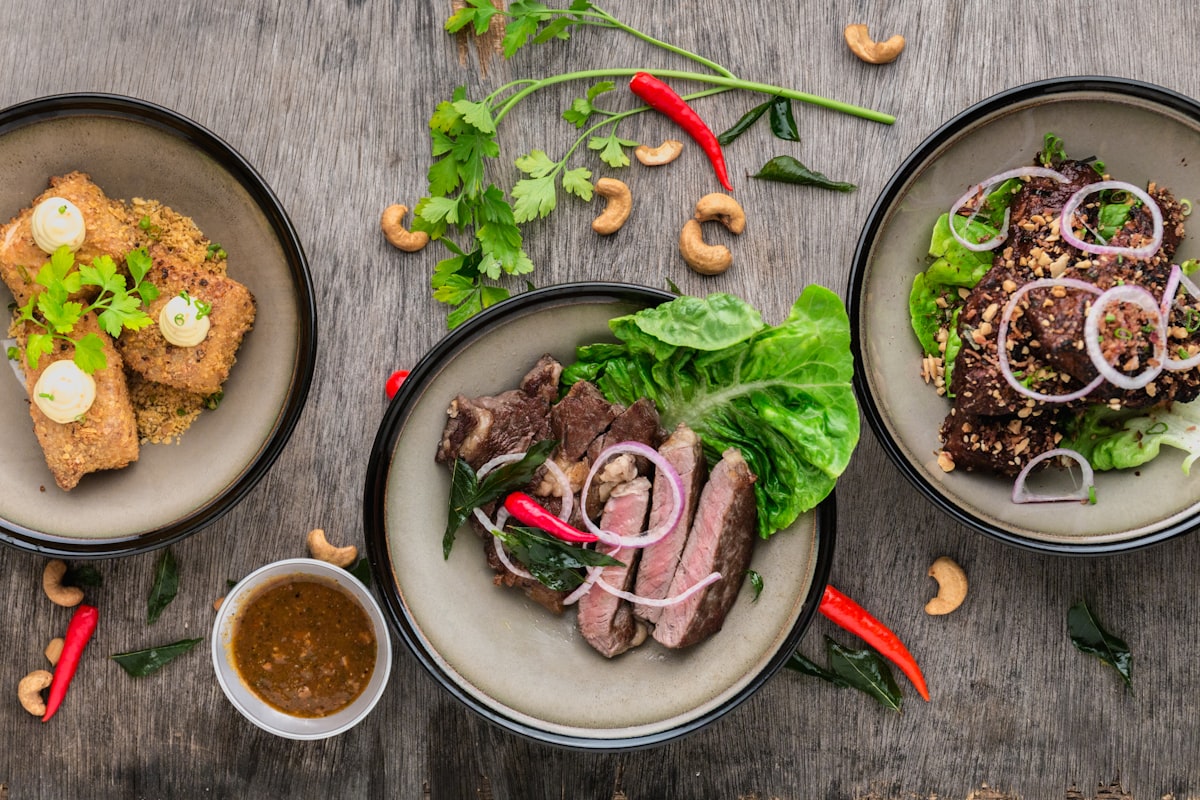
Ricoh GR III Food Photography: Settings, Recipes, and Styling Tips
The Ricoh GR III might be the best food photography camera nobody talks about. While Instagram feeds overflow with shots taken on smartphones and bulky mirrorless setups, the GR III sits quietly in the sweet spot between them — an APS-C sensor that delivers real depth of field and color science, packed into a body small enough to pull out at any restaurant without drawing attention.
No lens changes. No awkward tripod setups next to the table. No self-consciousness. Just a quick, discreet camera that produces images with the kind of natural warmth and shallow focus that makes food look genuinely appetizing. This guide covers everything you need to shoot better food photos with your GR III, from camera settings to preset recipes to composition fundamentals.
Why the Ricoh GR III Excels at Food Photography
Food photography has specific demands that the GR III meets surprisingly well:
- 28mm f/2.8 lens provides a natural perspective that doesn't distort plates or table settings — wide enough for flat lays, tight enough for single-dish focus
- APS-C sensor delivers genuine background blur at f/2.8, separating your subject from cluttered café backgrounds
- Macro mode (6cm minimum focus) lets you get extremely close for texture shots — think coffee crema, cake layers, or glistening sauce
- Fast startup (0.8 seconds) means you shoot before the food gets cold or the latte art fades
- Silent shooting mode keeps you discreet in quiet restaurants
- Touch AF on the rear screen lets you tap to focus on exactly the right element of the dish
The 28mm focal length is actually ideal for food photography. It captures a single plate with context — the edge of a table, a napkin, cutlery — without the barrel distortion of wider lenses. For overhead flat lays, 28mm covers a generous area without needing to stand on a chair.
Essential Camera Settings for Food Photography
Shooting Mode: Aperture Priority (Av)
Food photography is almost entirely about controlling depth of field, making Aperture Priority the natural choice. You decide how much of the scene stays sharp; the camera handles the rest.
Set the mode dial to Av and adjust aperture with the rear dial. In restaurants and cafés where light changes as you move between tables or the sun shifts, Av mode adapts instantly.
Aperture Selection
Your aperture choice defines the look of your food photos:
- f/2.8 — Maximum background blur. Isolates a single element: a fork lifting pasta, a drizzle of honey, steam rising from a bowl. The shallow depth of field draws the viewer's eye exactly where you want it.
- f/4 — Slightly more of the dish stays sharp while backgrounds remain soft. The best all-around setting for plated food at a 45-degree angle.
- f/5.6 — Use for dishes with multiple elements you want in focus, like a charcuterie board or a spread of tapas.
- f/8 — The flat lay aperture. When shooting directly overhead, you need most of the table surface in focus. f/8 delivers that without sacrificing too much sharpness to diffraction.
For most single-plate shots at a 30-45 degree angle, f/2.8 to f/4 will give you the most visually appealing results with creamy, undistracting backgrounds.
ISO and White Balance
Navigate to MENU > Shooting Settings > ISO Sensitivity:
- ISO Auto with upper limit set to ISO 3200 — the GR III handles noise well up to this point
- In dim restaurants, push to ISO 6400 if needed. A slightly noisy but sharp shot beats a blurry one
- Minimum shutter speed: 1/60s — this prevents motion blur when you're shooting handheld over a table
For white balance, the default AWB (Auto White Balance) works well in natural light. In restaurants with warm tungsten or mixed lighting:
- CTE (Color Temperature Enhancement) preserves the warm, cozy glow of restaurant lighting — often more appetizing than corrected white balance
- Manual WB using a white napkin as reference gives you the most accurate colors when it matters
Focus Settings
- Enable Macro Mode for any close-up work. The GR III focuses down to 6cm in macro mode, letting you fill the frame with textures
- Use Spot AF or Pinpoint AF for precise control over what's sharp — critical when shooting at f/2.8 where the depth of field is razor-thin
- Touch AF + Shutter on the rear screen: tap the part of the dish you want sharpest. For a burger, tap the top bun edge. For a latte, tap the foam art
Food Photography Preset Recipes
1. Warm Café — Natural Light
A warm, slightly faded look that works beautifully for brunch spots, bakeries, and window-lit meals.
- Image Control: Positive Film
- Saturation: +1
- Hue: 0
- High/Low Key: +1
- Contrast: -1
- Contrast (Highlight): -1
- Contrast (Shadow): +1
- Sharpness: +1
- Shading: 0
- Clarity: +1
- White Balance: CTE
- Grain Effect: Weak
This recipe lifts shadows gently, keeps skin tones and food colors warm, and adds the faintest film grain for character. The reduced highlight contrast prevents blown-out window light.
2. Moody Restaurant — Low Light
A darker, richer look for evening dining, candlelit tables, and intimate food presentations.
- Image Control: Bleach Bypass
- Saturation: -1
- Hue: 0
- High/Low Key: -1
- Contrast: +2
- Contrast (Highlight): +1
- Contrast (Shadow): -1
- Sharpness: +2
- Shading: +1
- Clarity: +2
- White Balance: Tungsten (then shift: A2, M1)
- Grain Effect: Off
Bleach Bypass desaturates slightly and boosts contrast, giving food a dramatic editorial look. The tungsten white balance shift adds a cool-warm split that works well under warm restaurant lighting.
3. Clean Flat Lay — Overhead Shots
A bright, clean look for overhead table shots, recipe photography, and food spreads.
- Image Control: Bright
- Saturation: +1
- Hue: 0
- High/Low Key: +2
- Contrast: -1
- Contrast (Highlight): -2
- Contrast (Shadow): +2
- Sharpness: +2
- Shading: 0
- Clarity: +1
- White Balance: AWB
- Grain Effect: Off
This recipe is designed for even, overhead lighting. The lifted shadows and pulled highlights create a flat, bright look that makes colors pop without harsh contrast. Food blogs and social media feeds favor this clean aesthetic.
4. Vintage Film — Nostalgic
A retro, slightly desaturated look for farmers markets, rustic meals, and homestyle cooking.
- Image Control: Retro
- Saturation: -1
- Hue: +1
- High/Low Key: 0
- Contrast: +1
- Contrast (Highlight): 0
- Contrast (Shadow): +1
- Sharpness: 0
- Shading: +2
- Clarity: 0
- White Balance: Daylight
- Grain Effect: Strong
The Retro image control paired with strong grain creates an analog film look. Daylight white balance locked in keeps tones consistent and slightly warm. Best for outdoor markets, rustic wooden tables, and handmade dishes.
Composition Techniques for Food Photography
The 45-Degree Angle
The most universally flattering angle for plated food. Hold the camera at roughly 45 degrees above the plate — this shows the height of the dish (crucial for burgers, layered desserts, and drinks) while still revealing what's inside bowls and on plates.
With the GR III at f/2.8, this angle creates a beautiful gradient of focus from the front of the plate (sharp) to the back (soft). It naturally guides the viewer's eye through the image.
The Overhead Flat Lay
Stand directly above the table and shoot straight down. This angle works best for:
- Multiple dishes arranged together
- Flat foods like pizza, salads, and open sandwiches
- Table scenes with props (cutlery, napkins, ingredients)
- Recipe step-by-step documentation
Use f/8 to keep the entire surface sharp. The GR III's 28mm lens is perfect here — it covers a good portion of the table without needing to climb on furniture.
The Hero Close-Up
Get in close with macro mode enabled. Fill the frame with a single compelling detail:
- Steam rising from a coffee cup
- Melted cheese pulling apart
- The cross-section of a sliced pastry
- Chocolate sauce dripping down a dessert
At 6cm minimum focus distance, the GR III reveals textures invisible to the naked eye. Use f/2.8 for maximum impact.
The Context Shot
Pull back to include the environment. Show the café, the kitchen counter, the picnic blanket. This shot tells a story beyond the food itself and works especially well for travel and lifestyle content.
The 28mm lens naturally includes context without making the food too small. Position the main dish in the lower third of the frame with the environment filling the rest.
Lighting Tips
Natural Light Is King
The best food photos use natural window light. When choosing a seat at a restaurant:
- Side lighting (window to your left or right) creates depth through shadows and highlights — the most dimensional, professional-looking option
- Backlighting (window behind the food) creates a glow around the edges of dishes and makes steam, smoke, and translucent foods luminous
- Avoid front lighting (window behind you) — it flattens the food and removes all dimension
Managing Harsh Light
If direct sunlight hits the table:
- Use a menu, napkin, or your hand to diffuse or block harsh shadows
- Shoot into the light (backlit) and let the GR III's metering handle exposure, then adjust with exposure compensation (+0.7 to +1.3)
- Switch to the Warm Café recipe above, which handles high-contrast light gracefully
Artificial Light
In dim restaurants without good window light:
- Avoid using the built-in flash — it kills the mood and creates harsh, unflattering shadows
- Push ISO to 3200-6400 and shoot at f/2.8 with a steady hand
- Use the Moody Restaurant recipe, which is designed for warm artificial light
- If the lighting is truly terrible, a discreet phone light held to the side can provide soft fill — just keep it subtle
Quick Reference Cheat Sheet
| Scenario | Aperture | ISO | WB | Recipe |
|---|---|---|---|---|
| Café window seat | f/2.8–f/4 | Auto (max 1600) | CTE | Warm Café |
| Dim restaurant | f/2.8 | Auto (max 6400) | Tungsten | Moody Restaurant |
| Overhead flat lay | f/8 | Auto (max 1600) | AWB | Clean Flat Lay |
| Market / outdoor | f/4–f/5.6 | Auto (max 800) | Daylight | Vintage Film |
| Macro detail | f/2.8 | Auto (max 3200) | AWB | Warm Café |
| Home cooking | f/4 | Auto (max 1600) | AWB | Clean Flat Lay |
Final Thoughts
The Ricoh GR III removes every excuse not to photograph your food well. It's small enough to carry everywhere, fast enough to capture dishes before they cool, and produces images with a depth and warmth that no phone can match. The preset recipes above give you ready-made looks for any dining situation, and the 28mm lens handles everything from tight macro details to full table spreads.
Start with the Warm Café recipe in Aperture Priority at f/2.8, find a window seat, and shoot. You'll be surprised how quickly the GR III elevates your food photography from casual snapshots to images worth sharing.
Get a free recipe + 15% off your first order
Our Natural Analog recipe (exact settings for the GR III, GR IIIx and GR IV) and a personal discount code, straight to your inbox.
No spam. Unsubscribe in one click.