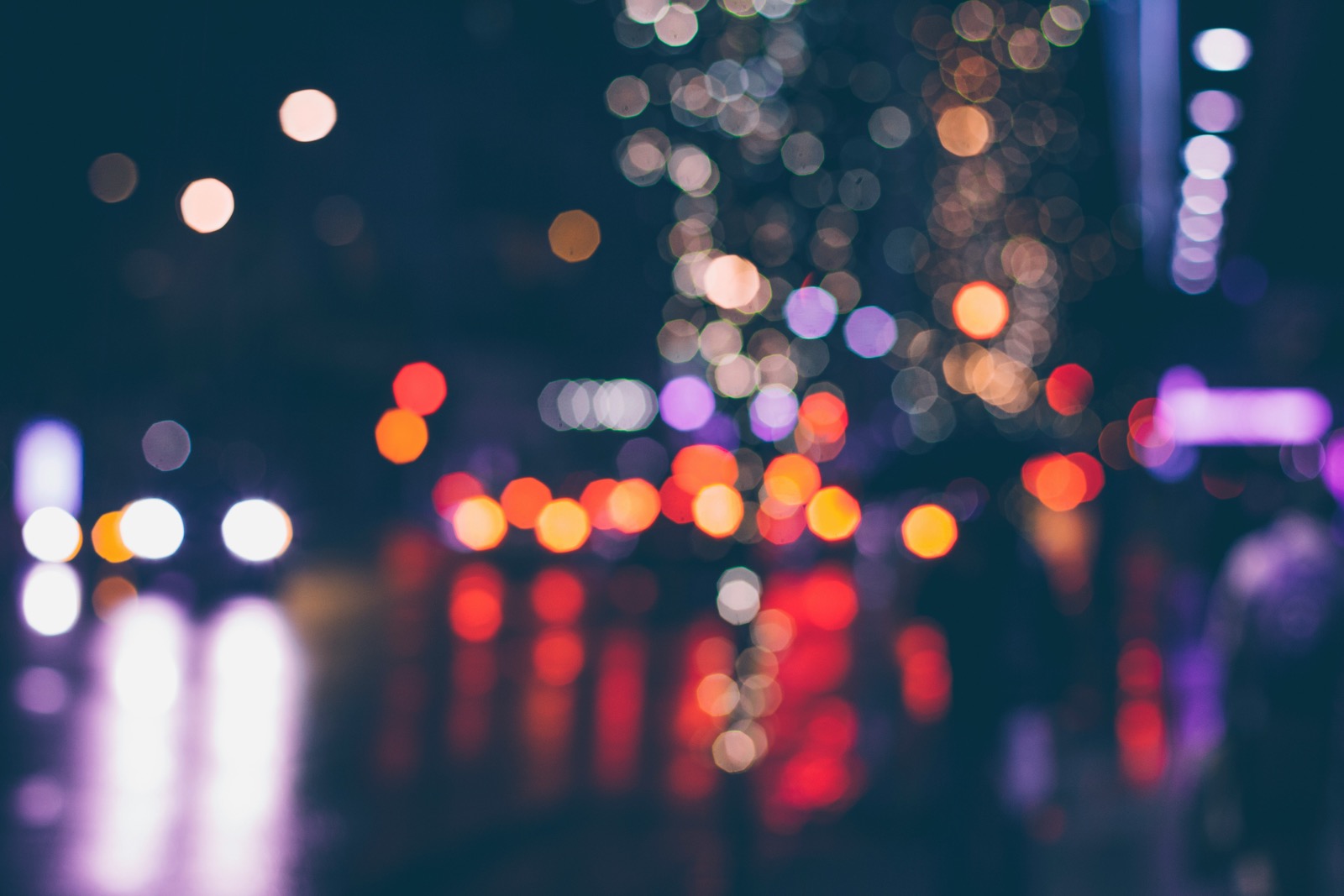
Ricoh GR IIIx HDF vs Standard: The HDF Filter Explained
Quick answer
The Ricoh GR IIIx HDF is the standard GR IIIx with a built-in Highlight Diffusion Filter in place of the 2-stop ND filter. One press of the Fn button softens highlights and the frame edges for a black-mist, vintage-film look; switched off, the camera behaves exactly like the standard model. Buy HDF if you shoot people, night streets and backlight. Buy the standard version if you rely on the ND filter for f/2.8 in hard sun or slow shutter speeds.
The Ricoh GR IIIx HDF looks almost identical to the standard GR IIIx. The only visible clue is a dark silver shutter button. Inside, one part has changed: the built-in 2-stop ND filter is gone and a Highlight Diffusion Filter sits in its place. That single swap decides which version you should buy.
This guide covers what HDF actually does, how it compares across the GR III, GR IIIx and GR IV, what you give up, and which of our recipes suit a diffused lens. It is based on Ricoh's official documentation, launch coverage from DPReview and PetaPixel, and the Image Control settings in our own presets. We are not claiming hands-on time with every HDF body; where we recommend settings, we explain the reasoning so you can test it yourself.
What is the Ricoh GR IIIx HDF?
Ricoh announced the GR III HDF and GR IIIx HDF on March 27, 2024, and they went on sale in April 2024. Ricoh describes the filter this way: it "diffuses highlights for softer light" and creates "a blurred effect along the image's edges," so images resemble film photography or vintage movies. DPReview likens the effect to a black mist filter, the kind cinematographers screw onto lenses to take the digital edge off.
The key point is that the filter is optical. It sits in the light path in front of the sensor, so it affects every file, JPEG and DNG alike. You cannot remove it in editing after the fact. The flip side is that with the filter switched off, PetaPixel notes the HDF models are identical to the existing cameras: same sensor, same lens, same files.
| GR IIIx (standard) | GR IIIx HDF | |
|---|---|---|
| Sensor | 24.24MP APS-C | 24.24MP APS-C |
| Lens | 26.1mm f/2.8 (about 40mm equivalent) | 26.1mm f/2.8 (about 40mm equivalent) |
| Built-in filter | 2-stop ND | Highlight Diffusion Filter |
| Default Fn button | Your choice | HDF on/off |
| Shutter button | Black | Dark silver |
| Weight (battery and card) | about 262g | about 262g |
Our pick: the HDF version for anyone who shoots mostly people, night streets and backlit scenes. The 40mm lens already pushes you toward portraits and closer framing, and that is where diffusion earns its keep.
HDF vs ND filter: what you actually lose
This is the part many buyers miss. Ricoh's launch announcement is explicit: "The ND (Neutral Density) filter is not available with the RICOH GR III HDF / GR IIIx HDF." DPReview and PetaPixel report the same. You cannot have both, because they share the same slot.
One caution: when we read Ricoh's US product pages on September 30, 2026, the GR IIIx HDF and GR IV HDF feature lists still included the standard models' ND filter paragraph. Treat that as leftover copy. The announcement and every launch review say the ND filter is gone.
What does losing 2 stops of ND mean in practice? Two things:
- Wide apertures in hard sun. On a bright day, f/2.8 at base ISO can push you to the camera's fastest shutter speed. The ND filter bought you two stops of headroom. Without it, you stop down, which is fine for street work but not if you wanted shallow depth of field at 40mm.
- Slow shutter in daylight. Motion-blurred crowds, silky water and panned cyclists at midday all used the ND filter. On an HDF body you will need to wait for shade or dusk.
If neither describes how you shoot, you lose nothing you would miss. Our GR III ND filter guide shows exactly what that filter does, so you can judge how often you actually turn it on.
When the HDF filter works, and when it doesn't
Diffusion only shows where there is something bright to spread. PetaPixel's sample pairs show the difference clearly on bright highlights and backlit scenes, with visible halos around light sources. In even, flat light there is little to bloom, so the filter mostly lowers contrast.
| Scene | HDF on or off | Why |
|---|---|---|
| Night streets, neon, headlights | On | Point lights bloom into soft halos, similar to halation on film |
| Backlit portraits, golden hour | On | Rim light around hair and skin glows; skin loses digital bite |
| Window light indoors | On | Bright windows soften instead of clipping hard |
| Overcast daylight | Off | Nothing bright to diffuse; the image just goes flat |
| Architecture, signage, text | Off | You want edge sharpness and clean lines |
| Landscapes you may print large | Off | Diffusion and the softened edges show at large sizes |
Our pick: leave HDF off as your default and switch it on for a scene, not for a day. Ricoh sets the Fn button to toggle HDF out of the box, so the filter is one press away. Resist reassigning that button until you know you rarely use it.
Ricoh documents no strength adjustment. The filter is on or off, so the way to fine-tune the look is through your Image Control recipe, which we cover below.
GR III HDF vs GR IIIx HDF vs GR IV HDF
There are now three HDF cameras. The filter concept is the same on all of them; the bodies differ.
| GR III HDF | GR IIIx HDF | GR IV HDF | |
|---|---|---|---|
| Lens | 18.3mm f/2.8 (about 28mm eq.) | 26.1mm f/2.8 (about 40mm eq.) | 18.3mm f/2.8 (about 28mm eq.) |
| Sensor | 24.24MP APS-C | 24.24MP APS-C | 25.74MP back-illuminated APS-C |
| Weight (battery and card) | about 257g | about 262g | about 262g |
| Launch | April 2024, $1,069.95 | April 2024, $1,149.95 | late January 2026, $1,599.95 |
| Ricoh US list, Sept 30, 2026 | $1,149.95 | $1,349.95 | $1,699.95 |
The GR IV HDF also added an electronic shutter up to 1/16,000 sec, according to DPReview, and Ricoh made that available on the standard GR IV through firmware. That e-shutter matters more on an HDF body than anywhere else: it gives back some of the wide-aperture headroom the missing ND filter took away. Ricoh's GR IV HDF page lists the mechanical shutter at 1/4000 sec, with the electronic mode reaching 1/16,000 sec.
Our pick by use case:
- Portraits and close street work: GR IIIx HDF. 40mm plus diffusion is the most flattering combination in the lineup.
- Night street at 28mm: GR IV HDF if the budget allows, because the e-shutter lets you shoot f/2.8 in daylight too.
- Best value HDF: GR III HDF. Same filter, 28mm, and the lowest list price of the three.
If you are still choosing a focal length, read our GR III vs GR IIIx comparison first, and our GR IV review for what the newer body changes.
Best recipes for an HDF camera
Image Control recipes work the same on HDF and standard bodies, because the menus and parameters are unchanged. The difference is that the filter has already lowered micro-contrast and softened highlights before your recipe runs. That changes which settings you want.
The rule we follow: don't stack softness on softness. A recipe that already uses heavy negative clarity and negative sharpening can turn mushy once the filter is on. Recipes with neutral clarity and strong color character hold up better.
| Preset | Key settings | With HDF on |
|---|---|---|
| Nostalgic Negative Film V2 | Negative Film, highlight contrast -4, clarity +1, sharpening 0 | Our first choice: soft highlights from the recipe, detail kept by clarity +1 |
| Portra 160 | Negative Film, shadow contrast -3, clarity 0, Shade WB | Backlit portraits; pastel skin plus the filter's glow |
| Indigo Film 800 | Retro, saturation +4, clarity -2, Fluorescent WB | Neon and night streets; the filter adds real bloom to its CineStill-style palette |
| Classic Chrome | Positive Film, contrast +2, clarity -1 | Daytime documentary when you want HDF on without losing punch |
| Nostalgic Negative Film | Negative Film, clarity -4, sharpening -3 | Use with HDF off; together they can go too soft |
Our pick: Nostalgic Negative Film V2 for everyday HDF shooting, and Indigo Film 800 after dark. Indigo's recipe was built to suggest halation around highlights; on an HDF body the filter produces that glow optically, so the look becomes more convincing, not more processed. Our CineStill 800T recipe guide goes deeper on that night palette.
A practical tip: save your HDF-friendly recipe to U1 and a sharper daylight recipe to U2, then test each one with the filter on and off before a shoot so you know which pairings you like.
HDF or a screw-in mist filter?
If you already own a standard GR III or GR IIIx, you do not need to sell it to get this look. A black mist or similar diffusion filter on a lens adapter does a comparable job, and you keep the built-in ND filter.
The trade-offs run both ways. The built-in HDF adds nothing to the camera's size and switches in one press, which is the whole point of a pocket camera. An external filter adds bulk, can't be flicked on and off as quickly, and needs an adapter. On the other hand, external filters come in several strengths, while Ricoh documents the HDF as on/off only.
Our pick: buy the HDF body if you are buying new anyway. Keep your standard body and try an external filter if you already own one and are unsure how often you would use diffusion.
Mistakes we see all the time
- Leaving HDF on all day. In overcast light it just lowers contrast. Turn it on when there is a light source or a bright background to spread.
- Stacking soft recipes. Clarity -4 and sharpening -3 plus diffusion rarely looks intentional. Pick one source of softness.
- Buying HDF for landscapes. The edge softening that flatters a portrait works against a large landscape print.
- Forgetting the ND filter is gone. Planning a daylight long exposure on an HDF body means stopping down to f/16 or waiting for shade.
- Trusting the product page feature list. Ricoh's announcement says HDF models have no ND filter, even where the product page copy says otherwise.
- Reassigning the Fn button too early. Give the default HDF toggle a few weeks before you move it; the fast switch is the feature.
In short
The GR IIIx HDF is the standard GR IIIx with a diffusion filter in place of the ND filter, switchable in one press and identical to the standard camera when it is off. Buy it for people, night and backlight; skip it if you depend on the ND filter for wide apertures in sun or daylight long exposures. Before you decide, check how often you use ND in our GR III ND filter guide, and see the full body breakdown in our Ricoh GR IIIx guide.
For an HDF body, start with the Negative Film Collection ($9.99), which includes Nostalgic Negative Film V2 and Portra 160, or get Indigo Film 800 ($4.99) for night streets where the filter's bloom does the most.
Frequently asked questions
What does HDF mean on the Ricoh GR IIIx?
HDF stands for Highlight Diffusion Filter. It is a physical filter built into the lens path that Ricoh says diffuses highlights for softer light and creates a blurred effect along the image's edges, giving results that resemble film photography or vintage movies. DPReview compares it to a black mist filter. It works on JPEG and DNG files alike because it acts optically, before the sensor.
Does the Ricoh GR IIIx HDF have an ND filter?
No. Ricoh's launch announcement states that the ND filter is not available on the GR III HDF and GR IIIx HDF, and DPReview and PetaPixel report the same trade. The diffusion filter takes the ND filter's slot. Some Ricoh US product pages still show the standard model's ND filter text, so trust the announcement, not the feature list.
Can you turn off the HDF filter on the GR IIIx HDF?
Yes. By default the Fn button on the back toggles HDF on and off in a single press, and you can reassign that button if you prefer. With the filter off, PetaPixel notes the camera is identical to the existing model, so you get the same sharp 24MP files as a standard GR IIIx. Ricoh documents no strength setting: the filter is simply on or off.
How much does the Ricoh GR IIIx HDF cost?
Ricoh Imaging Americas lists the GR IIIx HDF at $1,349.95, the GR III HDF at $1,149.95 and the GR IV HDF at $1,699.95, as read on September 30, 2026. At launch in April 2024, Ricoh announced the GR IIIx HDF at $1,149.95 and the GR III HDF at $1,069.95, so list prices have climbed since then.
Is the GR IIIx HDF worth it over the standard GR IIIx?
It is worth it if most of your keepers happen around people, at night or against the light, where diffusion flatters. It is not worth it if you shoot wide open in bright sun or like slow-shutter motion blur in daylight, because you lose the 2-stop ND filter. If you already own a standard GR IIIx, a screw-in mist filter on an adapter gets you close without changing bodies.
Is there a Ricoh GR IV HDF?
Yes. DPReview reported that the GR IV HDF would launch in late January 2026 at $1,599.95, $100 more than the standard GR IV at the time. Like the GR III HDF models, it replaces the ND filter with a highlight diffusion filter. It also gained an electronic shutter up to 1/16,000 sec, and Ricoh brought that e-shutter to the standard GR IV via firmware.
Sources: us.ricoh-imaging.com · us.ricoh-imaging.com · us.ricoh-imaging.com · us.ricoh-imaging.com · dpreview.com · dpreview.com · petapixel.com