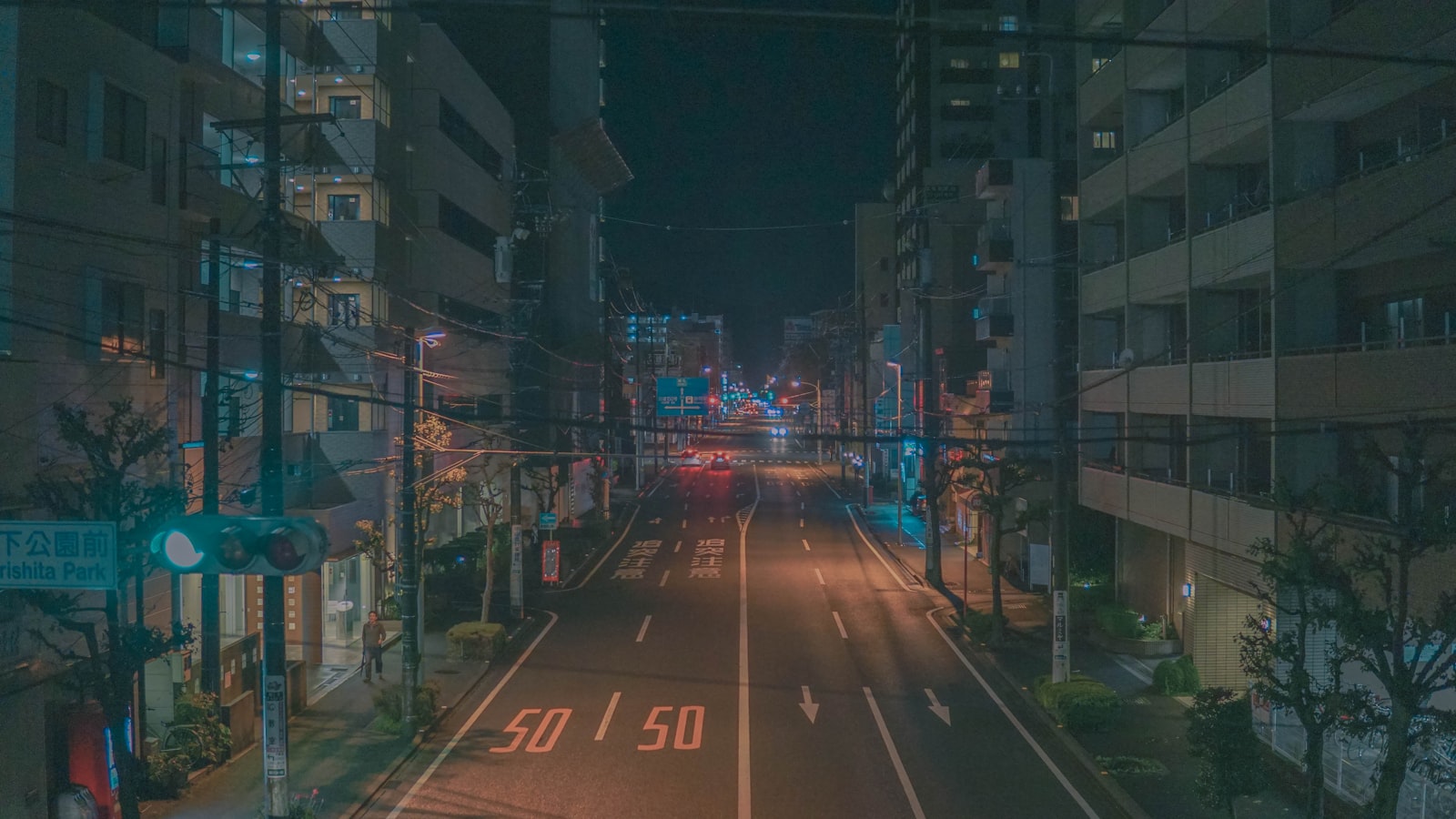
Portra 800 Recipe on Ricoh GR III: Warm Night Color
Quick answer
The best Portra 800 recipe for the Ricoh GR III uses the Negative Film Image Control with saturation 0, contrast -1, highlight contrast -2, shadow contrast +1, sharpness +1 and clarity -1, plus Color Temperature white balance at 6000K shifted A2/M2. Set Auto ISO with a 6400 ceiling, shoot at f/2.8 and add +0.3 to +0.7 EV. It renders warm, soft, grainy night color, like daylight film shot under streetlights.
Kodak Portra 800 is the film you load when the light starts to go and you don't want to stop shooting. It's the fastest stock in the Portra family, built for dim interiors, blue-hour streets, concerts and city nights, and it keeps the Portra traits people love: kind skin tones, soft contrast and color that feels honest rather than loud.
You can get close to that look in-camera on a Ricoh GR III, with no scanning and no Lightroom pass. This guide gives the full recipe, explains why each value is there, and adds what most recipe pages skip: what Kodak's own data sheet says about the film, and how to set ISO so the GR III's grain behaves like Portra's. Film facts come from Kodak's E-4040 technical data sheet (February 2016) and camera facts from Ricoh's GR III pages, all read on October 10, 2026.
The Ricoh GR III Portra 800 recipe
Open MENU > Image Control, pick Negative Film, and set:
| Setting | Value |
|---|---|
| Image Control | Negative Film |
| Saturation | 0 |
| Hue | 0 |
| Key (High/Low Key) | 0 |
| Contrast | -1 |
| Contrast (Highlight) | -2 |
| Contrast (Shadow) | +1 |
| Sharpness | +1 |
| Shading | 0 |
| Clarity | -1 |
| Toning | 0 |
| White Balance | Color Temperature |
| WB value | 6000K |
| WB fine adjustment | A2 / M2 |
Then set the shooting side:
| Setting | Value |
|---|---|
| Mode | Aperture priority |
| Aperture | f/2.8 (wide open) |
| ISO | Auto, upper limit 6400 |
| Exposure compensation | +0.3 to +0.7 EV in dim light |
| Focus | Snap Focus at 2 m for street, AF for people |
The two settings doing the heavy lifting are white balance and contrast. The warm 6000K setting with A2/M2 pushes everything toward the amber, slightly rosy cast you see in Portra 800 night frames. Pulling contrast to -1 and highlight contrast to -2 stops neon signs, café windows and streetlamps from clipping to flat white, while +1 shadow contrast keeps dark scenes from going muddy.
Saturation stays at 0 on purpose. The warm balance already carries the color, and Kodak describes Portra 800's saturation as "well balanced," not vivid. Clarity at -1 softens micro-contrast so skin stays smooth under ugly indoor light, and sharpness at +1 keeps edges crisp without exaggerating high-ISO noise.
Our pick: save it to a Custom Image Control slot (the GR III has Custom1 and Custom2) and assign the shooting settings to a User mode, so the night look is one dial turn away. Our User modes guide walks through it.
Why a daylight film looks warm at night
Here is the detail that explains the whole look. Portra 800 is not a tungsten film. Kodak's data sheet rates it at ISO 800 for "daylight or electronic flash." For 3200K tungsten light it calls for a No. 80A blue filter, which costs two stops and drops the film to ISO 200. Under 3400K photolamps it wants a No. 80B and ISO 250.
Almost nobody shooting Portra 800 at night carries an 80A, because losing two stops defeats the point of a fast film. So the film records indoor and street light the way it really is: orange. The data sheet even lists a correction of 70B + 50C filters and +3 stops for high-pressure sodium streetlights, which tells you how far from daylight those lamps are.
That warmth is what you're copying. Setting the GR III's Color Temperature white balance to 6000K tells the camera the light is cooler than it is, so it warms the frame, just as an unfiltered daylight film would.
This also tells you when to adjust the recipe:
| Light source | What the film does | What to set on the GR III |
|---|---|---|
| Daylight, open shade | Neutral, Kodak's reference light | 6000K reads a bit warm; try 5500K or use the Portra 400 recipe |
| Mixed street light at dusk | Warm with blue shadows | Recipe as written |
| Tungsten interiors, cafés | Strong orange cast | Recipe as written, or drop to 5000K if skin turns too orange |
| Sodium streetlights | Very orange, almost mono | Recipe as written; lean into it or switch to a cooler look |
| Electronic flash | Neutral (flash is daylight-balanced) | 5500K for natural skin, 6000K for warmth |
The 5000K and 5500K values are our starting points, not Kodak figures: change one variable at a time and look at skin tones.
ISO and grain: matching the GR III to Portra 800
Portra 800 is rated ISO 800, and Kodak's data sheet publishes negative density targets for pushing it one stop to EI 1600 and two stops to EI 3200. Kodak also praises its "best-in-class underexposure latitude." In other words, ISO 800 to 3200 is the film's honest working range.
The GR III maps onto that range nicely. Ricoh lists an ISO range of 100 to 102400, but Photography Blog's March 2019 review found the GR III's JPEGs noise-free from ISO 100 to 3200, with only a little noise at 6400, heavy noise from 12800, and ISO 51200 and 102400 "just too noisy to use."
| Portra 800 shot at | Film equivalent | GR III Auto ISO behavior |
|---|---|---|
| ISO 800 | Box speed | Clean, very fine texture |
| ISO 1600 | Push 1 | Clean |
| ISO 3200 | Push 2 | Clean, still crisp |
| ISO 6400 | Beyond Kodak's push table | Slight noise, reads as grain |
| ISO 12800+ | No film equivalent | Too noisy for this look |
That is why the recipe caps Auto ISO at 6400. Below that, the GR III's noise is faint enough to pass for Portra's grain. Kodak puts Portra 800's Print Grain Index at 48 for a 4x6 print from 35mm, where 25 is roughly the threshold of visible grain, so some texture is authentic. Above 6400, the noise stops looking like film.
The GR III's 3-axis stabilization, which Photography Blog credits with about 4 stops, helps you stay lower: at f/2.8 you can hand-hold slower shutter speeds of static scenes rather than letting ISO climb.
Where the Portra 800 look works best
City nights and neon
This is home turf. Warm streetlamps, lit shop windows and neon signs fall right into the amber balance, while the -2 highlight contrast protects the bright signs. Wet, reflective pavement after rain is the best-case scene. For the camera side of night street work, our night photography guide covers focus and shutter speeds.
Dim interiors and available light
Cafés, bars, restaurants and house parties are where 800 earns its keep. The warm balance flatters tungsten light instead of fighting it. Kodak specifically pitches the film for "natural skin tone reproduction" under "mixed lighting," and the soft contrast holds detail in both the bright window and the dark corner. More technique in our indoor available light guide.
Concerts and events
Fast, moody, unpredictable light is the film's specialty. Keep f/2.8, let Auto ISO work up to its 6400 cap, and accept the grain: it reads as energy, not error.
Where to be careful
In bright daylight, 6000K looks too golden and the soft contrast can feel flat. When the sun is out, switch to our Portra 400 recipe, which is set at 5800K with A2/M1, or the cleaner Portra 160 recipe at 5500K with A1/M1.
Portra 800 vs CineStill 800T on the GR III
These two get confused because both are 800-speed night films, but they are opposites. Portra 800 is daylight-balanced, so night light goes warm. CineStill 800T is tungsten-balanced, so the same light renders neutral to cool, with teal shadows and red halation around bright points.
Pick by mood: Portra 800 for warm, intimate, nostalgic nights with people in them; 800T for cool, cinematic, empty-street frames. Our CineStill 800T recipe guide has the settings for that side.
Mistakes we see all the time
- Letting Auto ISO run to 102400. An open upper limit is far too high for a film look. Cap it at 6400.
- Underexposing to protect highlights. Portra stocks like light. The -2 highlight contrast already guards the bright spots, so add +0.3 to +0.7 EV and keep the shadows open.
- Shooting it in midday sun. The recipe is tuned for artificial light. In daylight it just looks too orange.
- Adding saturation. The warmth comes from white balance. Raising saturation on top pushes skin toward orange.
- Using Auto white balance. AWB tries to neutralize warm light, which removes exactly the cast you're after. Keep Color Temperature fixed.
In short
The best Portra 800 recipe for the GR III is Negative Film with soft contrast, 6000K and A2/M2, used with Auto ISO capped at 6400 and f/2.8. It works because Portra 800 is a daylight film that goes warm under night light, and the GR III's grain stays film-like up to that ISO. Use it after dark, and swap to the Portra 400 recipe when the sun comes back.
If you want a ready-made warm color negative look with the camera screenshot included, get Reggie's Color Negative, our best-selling Portra-inspired preset. For the cool side of the night, Indigo Film 800 is our CineStill-style recipe, and both come together in the Best Sellers bundle, or browse the full preset collection.
Frequently asked questions
What are the Ricoh GR III settings for a Kodak Portra 800 look?
Negative Film Image Control, saturation 0, hue 0, key 0, contrast -1, highlight contrast -2, shadow contrast +1, sharpness +1, shading 0, clarity -1, toning 0. White balance: Color Temperature at 6000K with a fine adjustment of A2 and M2. Pair it with Auto ISO capped at 6400, aperture priority at f/2.8 and +0.3 to +0.7 exposure compensation in dim light.
Is Kodak Portra 800 a tungsten film?
No. Kodak's E-4040 technical data sheet rates Portra 800 at ISO 800 in daylight or with electronic flash, and asks for a No. 80A filter, which drops the speed to ISO 200, for 3200K tungsten light. Most people never use that filter, which is why Portra 800 photos taken indoors and at night look warm and amber. Our recipe recreates that unfiltered warmth with a 6000K white balance.
What ISO should I use for a Portra 800 recipe on the GR III?
Use Auto ISO with an upper limit of 6400. Portra 800 is rated ISO 800, and Kodak's data sheet gives density targets for pushing it to EI 1600 and EI 3200, so 800 to 3200 is the authentic range. Photography Blog found the GR III's JPEGs noise-free up to ISO 3200 and only slightly noisy at 6400, so that ceiling keeps the grain looking like film rather than digital mush.
Is Bennett 800 the same as a Portra 800 recipe?
We can't confirm it. Many people search for a Ricoh recipe called Bennett 800, but when we updated this guide on October 10, 2026 we found no original published version we could verify, so we can't tell you its settings or compare them. If you want a warm, high-ISO color negative look on the GR III, the Portra 800 recipe on this page is complete and free to use.
Does the Portra 800 recipe work on the Ricoh GR IIIx and GR IV?
Yes. Ricoh's specification page lists the same Image Control modes, the same adjustable parameters and the same ±14-step A-B and G-M white balance fine adjustment for the GR III and GR IIIx, so the recipe goes in unchanged. On the newer GR IV, enter the same values, then check white balance on your first few night frames before you trust it.
Sources: cdn.shopify.com · ricoh-imaging.co.jp · ricoh-imaging.co.jp · photographyblog.com
Get a free recipe + 15% off your first order
Our Natural Analog recipe (exact settings for the GR III, GR IIIx and GR IV) and a personal discount code, straight to your inbox.
No spam. Unsubscribe in one click.