Ricoh GR III Minimalist Photography: Settings, Composition, and Best Recipes
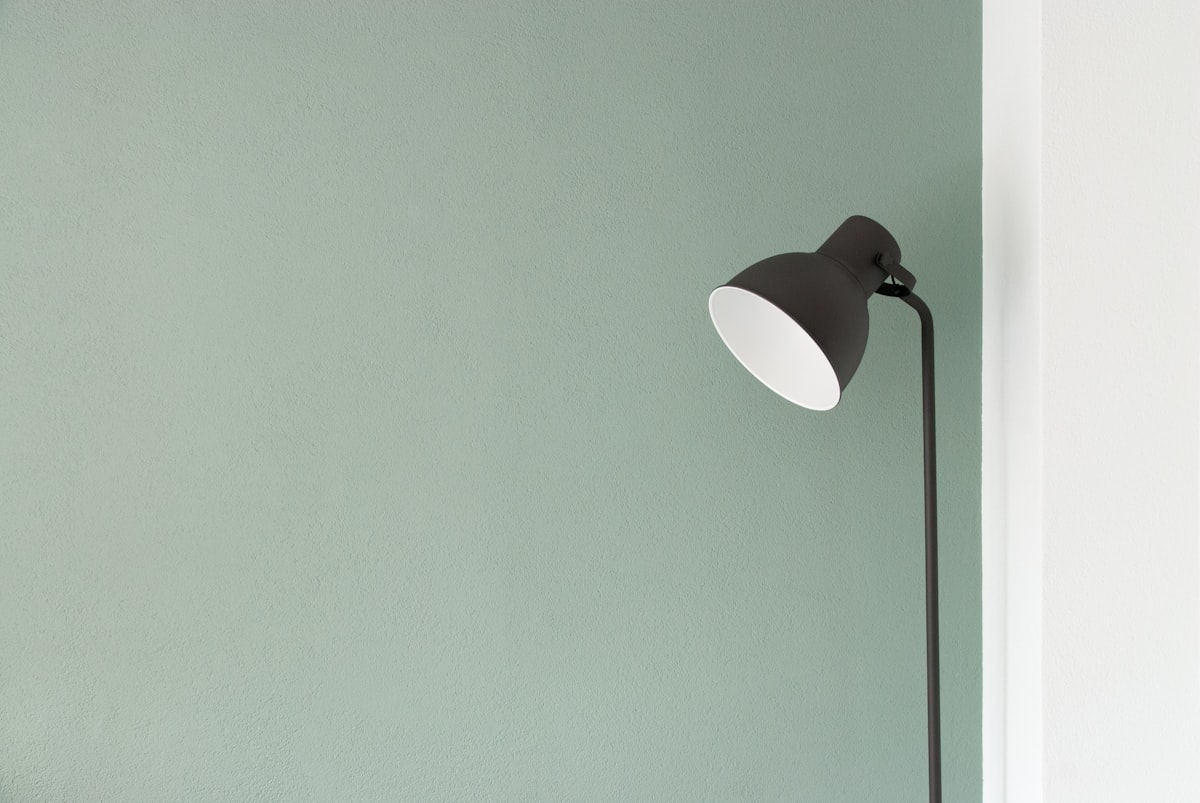
Minimalist photography is about distilling a scene down to its essence — one subject, clean lines, and generous negative space. No clutter, no distractions, just the raw visual impact of simplicity. And there might be no better camera for it than the Ricoh GR III.
The GR III itself embodies minimalism. A fixed 28mm lens, a compact body that disappears in your pocket, and image controls that let you strip color and tone down to exactly what the scene needs. This guide covers how to use your GR III to create minimalist images that feel intentional, refined, and visually powerful.
Why the Ricoh GR III Is Perfect for Minimalist Photography
Minimalist photography rewards deliberate choices, and the GR III is built for exactly that:
- Fixed 28mm lens forces you to compose with your feet — no lazy zooming, just intentional framing that strengthens every shot
- APS-C sensor captures subtle tonal gradations in large areas of negative space, where lesser sensors would show noise or banding
- Snap Focus lets you pre-set a focus distance and shoot instantly, perfect for architectural lines and geometric compositions
- High Contrast B&W image control produces stunning monochrome files straight out of camera
- Compact size means you always have it when you spot a lone tree against an empty sky or a single figure on a vast staircase
- In-body image stabilization keeps handheld long exposures sharp, useful for smooth water or cloud-streak minimalism
The 28mm focal length is a natural fit. It's wide enough to include sweeping negative space around a subject, but not so wide that it distorts architectural lines. For minimalism, where every element in the frame matters, 28mm hits the sweet spot.
Essential Camera Settings for Minimalist Photography
Shooting Mode: Aperture Priority (Av) or Manual (M)
Minimalist images often feature large areas of uniform tone — bright skies, white walls, dark water. These scenes can fool the camera's meter, so you need control over exposure.
Aperture Priority (Av) works well as a starting point. Dial in your desired depth of field and use exposure compensation to fine-tune brightness. For minimalist shots with lots of white or bright space, add +0.7 to +1.3 EV to prevent the camera from underexposing.
Manual mode (M) gives you full control when shooting a series — for instance, a set of images along a white corridor where you want perfectly consistent exposure across every frame.
Aperture Selection
Minimalism often means everything in the frame should be deliberately sharp or deliberately soft. There's rarely a middle ground:
- f/8 to f/11 — The sweet spot for architectural minimalism, geometric patterns, and landscape minimalism. Maximum sharpness across the frame with excellent resolution of fine lines and edges.
- f/5.6 — A good general-purpose setting when you want a sharp subject with very slightly softened edges to the frame.
- f/2.8 — Use for isolating a single small object against a blurred, uniform background. A lone flower, a single chair, a solitary figure. The wide aperture turns busy backgrounds into smooth, minimalist washes of color.
For most minimalist work — architecture, geometry, negative space — f/8 delivers the sharpest results and keeps every line in the frame crisp.
ISO and Exposure
Navigate to MENU > Shooting Settings > ISO Sensitivity:
- ISO 100 whenever possible — minimalist images often feature smooth, unbroken tones where noise would be immediately visible
- ISO Auto with upper limit set to ISO 800 for handheld situations where you need some flexibility
- Push to ISO 1600 only when necessary, and favor slightly underexposing to protect highlight detail in bright skies or white walls
Exposure compensation is your most important tool in minimalist photography. The camera's meter wants to make everything middle gray, but minimalist images are often deliberately bright or deliberately dark:
- High-key minimalism (white walls, foggy scenes, bright skies): dial in +1.0 to +1.7 EV
- Low-key minimalism (dark backgrounds, silhouettes, shadow play): dial in -1.0 to -2.0 EV
- Check the histogram frequently. For high-key work, the histogram should be pushed right without clipping. For low-key, pushed left with controlled shadow detail.
Focus Settings
- Snap Focus is the minimalist photographer's best friend. Set your snap distance to 2.5m for architectural and street minimalism — press the shutter and the camera instantly focuses at that distance with no hunting or delay
- AF Area: Spot for precise focus on a single subject within negative space — a lone boat on water, a single window on a facade
- AF Area: Auto when the subject is obvious and fills a clear portion of the frame
For architectural minimalism where everything should be sharp, combine Snap Focus at 2.5m or 5m with f/8. The resulting depth of field covers most architectural scenes from a few meters to infinity.
Metering
- Center-weighted metering works well for most minimalist compositions where the subject sits centrally within negative space
- Spot metering when you need to expose precisely for a small subject against a very bright or very dark background — a dark figure against white fog, or a lit window in a dark wall
Composition Principles for Minimalist Photography
Negative Space Is Your Subject
The most common mistake in minimalist photography is thinking the object is the subject. In minimalist images, the empty space around the object often carries more visual weight. A tiny boat at the bottom of the frame with an enormous sky above it isn't a photo of a boat — it's a photo of vastness, with the boat providing scale.
Give your subjects room to breathe. If you think you've included enough negative space, take two steps back and include more.
Clean Lines and Geometry
The GR III's 28mm lens renders straight lines cleanly when you keep the camera level. Use the built-in electronic level (MENU > Shooting Settings > Electronic Level > On) to ensure horizons and architectural verticals are perfectly straight.
Minimalist architecture photography lives and dies by straight lines. A horizon that's off by even one degree breaks the entire image. Enable the grid overlay and electronic level, then take the extra second to align before pressing the shutter.
The Rule of Simplicity
Before pressing the shutter, ask: can I remove anything else from this frame? If there's an element that doesn't serve the composition — a trash can at the edge, a distracting sign, a parked car — reframe to exclude it. In minimalist photography, every single element must earn its place.
Contrast and Tonal Separation
Minimalist images rely on strong tonal separation between subject and background. Look for:
- Dark subjects against light backgrounds (silhouettes against white sky)
- Light subjects against dark backgrounds (white architecture against deep blue sky)
- Single-color subjects against complementary-color backgrounds
- Strong geometric shadows that create natural divisions in the frame
Minimalist Photography Preset Recipes
1. Clean High-Key — Bright and Airy
A crisp, bright look perfect for white architecture, foggy mornings, and beach minimalism.
- Image Control: Standard
- Saturation: -2
- Hue: 0
- High/Low Key: +2
- Contrast: +1
- Contrast (Highlight): -2
- Contrast (Shadow): -1
- Sharpness: +2
- Shading: 0
- Clarity: +2
- White Balance: Daylight (or CTE for slightly warmer tones)
This recipe pushes highlights bright while keeping contrast just high enough to maintain definition. The reduced saturation prevents colors from competing with the clean, airy feel. Increased clarity enhances architectural edges and fine textures.
2. Deep Monochrome — Bold Black and White
A rich, contrasty black and white preset for silhouettes, shadows, and graphic minimalism.
- Image Control: High Contrast B&W
- Filter Effect: Red
- Toning: None
- Key: 0
- Contrast: +2
- Contrast (Highlight): +1
- Contrast (Shadow): +2
- Sharpness: +3
- Shading: 0
- Clarity: +3
The red filter darkens skies dramatically, making white buildings pop against deep gray-to-black skies. The aggressive contrast and clarity settings produce graphic, almost abstract results from everyday architectural scenes. This preset transforms ordinary walls, staircases, and bridges into bold geometric compositions.
3. Muted Color — Desaturated and Calm
A restrained color palette that keeps minimalist images feeling tranquil and understated.
- Image Control: Standard
- Saturation: -3
- Hue: 0
- High/Low Key: +1
- Contrast: 0
- Contrast (Highlight): -1
- Contrast (Shadow): 0
- Sharpness: +1
- Shading: 0
- Clarity: +1
- White Balance: Shade (adds subtle warmth to muted tones)
This recipe strips most color from the scene without going fully monochrome. The result feels painterly — muted pastels, soft earth tones, and gentle transitions. Works beautifully for coastal scenes, desert landscapes, and urban minimalism with colored facades.
4. Blue Hour Minimal — Cool and Ethereal
A cool-toned preset for twilight minimalism, long exposures, and waterfront scenes.
- Image Control: Bleach Bypass
- Saturation: -1
- Hue: 0
- High/Low Key: 0
- Contrast: +1
- Contrast (Highlight): 0
- Contrast (Shadow): +1
- Sharpness: +1
- Shading: 0
- Clarity: +2
- White Balance: Fluorescent (pushes cool blue tones)
The Bleach Bypass base with cool white balance creates an ethereal, slightly cinematic feel. Combined with blue-hour light, this preset produces images that feel suspended in time — perfect for lone subjects against twilight skies or smooth long-exposure water.
Types of Minimalist Photography to Try
Architectural Minimalism
Modern buildings are a goldmine for minimalist photography. Look for:
- Repeating patterns on facades (windows, balconies, panels)
- A single contrasting element breaking a pattern (one open window among closed ones)
- Strong geometric shadows cast on plain walls
- The clean edge of a building against an empty sky
Settings: f/8, ISO 100, Snap Focus at 5m, electronic level on, Clean High-Key or Deep Monochrome preset.
Landscape Minimalism
Vast, empty landscapes reduce naturally to minimalist compositions:
- A lone tree on a horizon line
- A single rock in still water
- Fog that erases everything except the nearest subject
- Sand dunes with a single set of footprints
Settings: f/8-f/11, ISO 100, Spot AF for the subject, +1.0 EV for fog or snow scenes, Muted Color or Blue Hour Minimal preset.
Urban Minimalism
Cities are full of minimalist opportunities if you train your eye:
- A single pedestrian crossing an empty plaza
- One brightly colored door on a neutral wall
- Power lines against a clear sky
- A bench, a lamppost, a bicycle — alone in the frame
Settings: f/5.6-f/8, ISO Auto (max 800), Snap Focus at 2.5m for quick captures, any preset depending on mood.
Abstract Minimalism
Get close and remove all context:
- A shadow line across a wall
- The curve of a handrail
- Reflections in still water
- Texture of concrete, wood grain, or peeling paint
Settings: f/2.8-f/5.6, Macro mode for extreme close-ups, Spot AF, Deep Monochrome or Muted Color preset.
Tips for Stronger Minimalist Images
-
Shoot in harsh light. Midday sun creates the strongest shadows and the cleanest contrast between light and dark. Unlike most photography, minimalism thrives in hard light.
-
Embrace bad weather. Fog, mist, and overcast skies naturally erase backgrounds and simplify scenes. A foggy morning can turn an ordinary park into a minimalist masterpiece.
-
Use long exposures. Set the GR III to a low ISO and small aperture, or use the built-in ND filter simulation in post. Long exposures smooth water and blur clouds, turning busy scenes into clean compositions.
-
Shoot in monochrome. When in doubt, go black and white. Removing color is the fastest way to simplify an image. The GR III's High Contrast B&W mode shows you the monochrome result in the viewfinder, helping you compose in tones rather than colors.
-
Leave more space than you think you need. The most impactful minimalist images often have 80-90% negative space. If your subject fills more than a quarter of the frame, you're probably too close.
-
Look for one color against another. A red fire hydrant against a gray wall. A yellow taxi against white snow. When you reduce the scene to two colors, the result is instantly minimalist.
-
Revisit locations. Minimalist photography depends on specific conditions — the right light, the right weather, the absence of clutter. A location that's cluttered on Saturday might be perfectly empty at 6am on Tuesday.
Quick Reference Settings Card
| Scenario | Mode | Aperture | ISO | Focus | Preset | |---|---|---|---|---|---| | Architecture | Av | f/8 | 100 | Snap 5m | Clean High-Key | | Silhouettes | M | f/8 | 100 | Snap 2.5m | Deep Monochrome | | Foggy landscape | Av (+1.3 EV) | f/8 | 100 | Spot AF | Muted Color | | Lone subject | Av | f/2.8 | Auto 800 | Spot AF | Muted Color | | Blue hour | M | f/5.6 | 400 | Spot AF | Blue Hour Minimal | | Abstract close-up | Av | f/4 | Auto 800 | Macro + Spot | Deep Monochrome |
Final Thoughts
Minimalist photography forces you to slow down and really see. It's not about finding spectacular subjects — it's about finding the simplest possible way to frame what's already in front of you. A wall becomes a canvas. A shadow becomes a subject. Empty space becomes the story.
The Ricoh GR III is the perfect tool for this practice. Its fixed lens removes the temptation to zoom past the composition work. Its compact size means you always have it when the light hits a building just right or fog rolls through a park. And its image controls — especially High Contrast B&W and the preset recipes above — let you craft the final look in-camera, keeping the workflow as minimal as the images.
Start with one of the presets above, head to the nearest modern building or open landscape, and practice the art of less. The best minimalist images often come from the most ordinary places — you just need to see them with a simpler eye.
Ready to elevate your minimalist photography? Browse our preset collections designed for the Ricoh GR III, or explore our curated bundles for complete creative workflows.