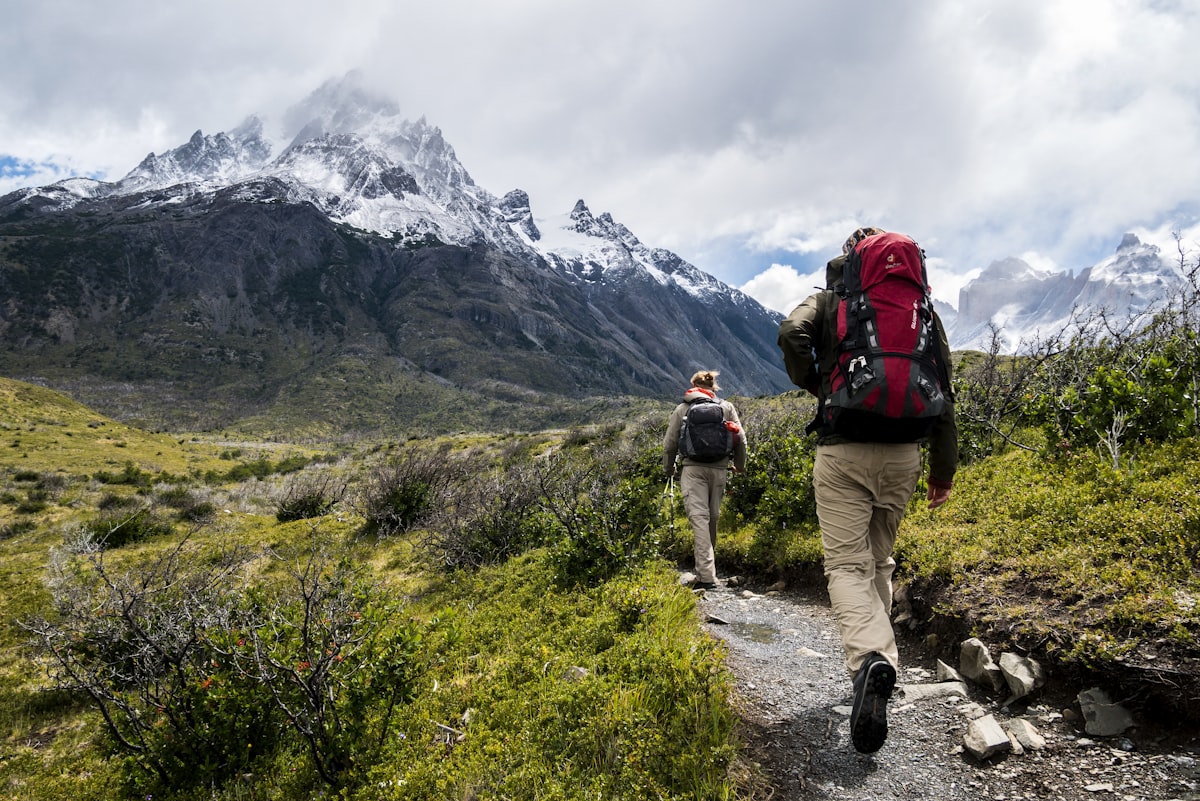
Ricoh GR III Mountain & Hiking Photography: Settings, Tips, and Best Recipes
Mountain trails offer some of the most rewarding photography opportunities you will ever encounter -- dramatic ridgelines, vast valleys, shifting weather, and light that changes with every switchback. The Ricoh GR III is uniquely suited to this environment. At just 257 grams, it disappears into a jacket pocket, freeing your hands for scrambling over rocks and navigating narrow paths while still delivering image quality that rivals much larger cameras.
This guide covers everything you need to shoot confidently in the mountains with your GR III, from camera settings and preset recipes to practical fieldcraft that keeps you moving and shooting.
Why the Ricoh GR III Excels on the Trail
Dedicated hiking photographers often carry heavy camera bodies and multiple lenses. The GR III offers a different approach:
- Pocket-sized and featherweight means no neck strain on long ascents and no fumbling with a camera bag on exposed ridges
- Fast startup time lets you grab the shot when you round a bend and the view opens up unexpectedly
- 28mm equivalent field of view is wide enough for sweeping panoramas yet tight enough for detail shots of wildflowers and rock textures
- Weather-sealed body handles the light mist and drizzle that mountain weather frequently delivers
- Built-in Shake Reduction compensates for the unsteady footing and heavy breathing that come with altitude
The tradeoff is a fixed focal length, but constraints breed creativity. Working within 28mm forces you to think more carefully about composition, and the results often have a cohesive, intentional quality that zoom-lens shooting lacks.
Essential Camera Settings for Mountain Photography
Shooting Mode: Aperture Priority
Aperture Priority (Av) is the most versatile mode for mountain photography. You control depth of field while the camera handles the constantly shifting light as clouds pass over the sun and you move between sunlit ridges and shadowed valleys.
- f/5.6 for general trail shooting with strong sharpness across the frame
- f/8 for landscape compositions where you want front-to-back sharpness from foreground rocks to distant peaks
- f/11 for maximum depth of field in grand vistas, but be aware of diffraction softening beyond this point on the GR III's sensor
ISO Configuration
Mountain light is usually abundant, but conditions change fast. Configure Auto ISO through MENU > Shooting Settings > ISO Sensitivity:
- ISO range: 100-1600
- Minimum shutter speed: 1/125s to freeze any subject movement and counteract your own motion on the trail
Start at ISO 100 in bright conditions for maximum dynamic range -- you will want every bit of it when capturing scenes with bright snow or sky alongside deep shadowed valleys. In overcast conditions or dense forest, let Auto ISO handle the adjustments up to 1600.
White Balance Strategy
Mountain light varies dramatically depending on altitude, cloud cover, and time of day. Here is how to handle it:
- Daylight (5200K) is the safest default for most mountain shooting. It renders blue skies accurately and preserves the natural warmth of sunlit rock and earth.
- Cloudy (6000K) adds gentle warmth that counteracts the blue-ish cast overcast skies can throw onto mountain scenes. Use this when clouds roll in.
- CTE (Color Temperature Enhancement) amplifies the existing color cast, which works beautifully during sunrise and sunset at altitude where the warm light is already intense.
- Manual Kelvin at 5000-5500K gives precise control for midday shooting when you want neutral, true-to-life colors.
Avoid Auto White Balance in the mountains. AWB tends to neutralize the cool blue tones of distant peaks and the warm glow of golden-hour ridgelines -- the very color contrasts that make mountain photography compelling.
Metering for High-Contrast Scenes
Mountain scenes often have extreme contrast between bright sky, sunlit snow or rock, and deep shadowed valleys. The camera's meter can be fooled easily.
Center-weighted metering provides more predictable results than multi-segment metering in these high-contrast environments. Meter on the midtones of your scene -- sunlit grass, mid-gray rock, or a section of trail -- and let the highlights and shadows fall where they may.
Use exposure compensation strategically:
- -0.3 to -0.7 EV when bright sky or snow dominates the frame, to protect highlights and retain detail in clouds
- +0.3 to +0.7 EV when shooting into shadowed valleys or dense forest, to lift the midtones without blowing the sky
- -1.0 EV for dramatic, moody mountain scenes where you want deep shadows and saturated colors
Focus Settings
- AF with Multi-Point works well for general landscape shooting where the subject is obvious
- Snap Focus at 5m is excellent for quick shots on the move -- at f/8, nearly everything from 2 meters to infinity will be sharp
- Manual Focus set to infinity is ideal for distant peak panoramas, but verify sharpness with the magnification tool since the GR III's infinity mark can vary slightly with temperature changes at altitude
Best Preset Recipes for Mountain Photography
Alpine Clarity
A clean, sharp recipe designed to maximize detail in distant peaks and textures. Set Image Control to Standard, push Sharpness to +2, and set Contrast to +1. Keep Saturation at 0 for true-to-life colors. Use Daylight white balance. This recipe produces crisp, punchy images that hold up well when printed large or viewed at 100% on screen.
Mountain Film Look
Emulates the warm, slightly faded look of classic landscape photography shot on color negative film. Set Image Control to Soft, Contrast to -1, and Saturation to -1 for muted, organic tones. Set Shadow Adjustment to +1 to gently open shadows. Use Cloudy white balance for added warmth. The result has a nostalgic, analog quality that suits mountain photography beautifully.
Moody Overcast
When clouds sit heavy on the peaks and mist drifts through the valleys, lean into the atmosphere. Set Image Control to Standard, push Contrast to +2, and set Saturation to -1 for desaturated, dramatic tones. Use Daylight white balance to keep the cool, blue cast that overcast mountain weather naturally produces. Set Key Adjustment to -1 to darken the overall mood.
High-Altitude B&W
Mountains have bold shapes and strong tonal contrasts that translate powerfully to black and white. Set Image Control to Monotone with a red filter effect to darken blue skies dramatically and make clouds pop against the firmament. Push Contrast to +3 and enable Grain Effect at Low for a classic film look. The red filter also adds separation between rock, snow, and sky that color images sometimes lack.
Warm Trail Light
For golden hour on the mountain, when low sun rakes across ridgelines and turns everything amber. Set Image Control to Vivid, keep Saturation at 0 (Vivid handles the boost), and set Contrast to 0 for balanced tones. Use Shade white balance (7500K) to push the warmth further. This recipe makes sunrise and sunset shots from mountain vantage points absolutely glow.
Techniques for Better Mountain Photography
Use Foreground Elements for Depth
The 28mm field of view on the GR III is wide enough to include foreground interest -- wildflowers, lichen-covered rocks, a section of trail, your own boots on a ledge. These foreground elements create a sense of depth and scale that transforms a flat landscape into an immersive scene. Get low and close to your foreground subject while keeping the peaks in the background.
Shoot During Weather Transitions
Clear blue skies make for pleasant hiking but often produce flat, uninteresting photographs. The most dramatic mountain images come during weather transitions -- when storms are building, breaking apart, or when clouds are streaming over ridgelines. Carry the GR III in an accessible pocket so you can shoot quickly when a break in the clouds sends a shaft of light across a valley.
Work the Switchbacks
As you gain elevation on a trail, the same view transforms with every switchback. Resist the urge to only shoot from the summit. Some of the best mountain photographs come from mid-trail, where the foreground is still interesting and the peaks above have dramatic foreshortening. Shoot on the way up and on the way down -- the light will be completely different.
Embrace the Vertical Format
While the GR III shoots natively in landscape orientation, do not forget to rotate it for vertical compositions. Tall mountain faces, narrow valleys, towering trees, and cascading waterfalls all benefit from a vertical frame. The 28mm focal length in vertical orientation can create powerful leading-line compositions that draw the eye from trail to summit.
Bracket Important Shots
Mountain scenes routinely exceed the dynamic range of any single exposure. For critical compositions, use the GR III's exposure bracketing to capture three frames at different exposures. You can blend these later for scenes where both the bright sky and deep valleys need full detail. Set bracketing to +/- 1.5 EV for a good range in high-contrast conditions.
Photograph the Details
Not every mountain photo needs to be a grand vista. The GR III's excellent close-focus capability lets you capture the textures and details that define mountain environments -- the grain of weathered wood on a trail marker, ice crystals forming on a rock, the pattern of bark on an alpine tree, or the colors of mineral-rich stone. These detail shots add variety to a mountain photography series and tell a more complete story.
Practical Tips for Shooting on the Trail
Protect your gear from temperature swings. Moving from a warm car or hut to cold mountain air can cause condensation on the lens. Keep the GR III in an outer pocket so it acclimates gradually rather than experiencing a sudden temperature change.
Carry a spare battery. Cold temperatures drain batteries faster, and the GR III's small battery is its one real limitation for mountain photography. A second battery in a warm inner pocket ensures you do not run out of power at the summit.
Use a wrist strap, not a neck strap. On exposed terrain, a neck strap can catch on rocks or swing the camera into obstacles. A wrist strap keeps the GR III secure while allowing quick one-handed shooting.
Clean the lens frequently. Mountain air may be clean, but wind kicks up dust and pollen, and your own breath can fog the lens in cold conditions. Carry a small microfiber cloth in an accessible pocket and wipe the lens before important shots.
Save GPS data for your favorite locations. If your phone has a GPS logging app, run it while you hike. Matching timestamps with your GR III images later lets you geolocate your best spots for return visits.
Common Mountain Photography Mistakes
Shooting only at the summit. Summits are special, but the light there is not always cooperative. Some of the best mountain photographs come from tree line transitions, ridgeline trails, and valley viewpoints where the composition has more depth and variety.
Ignoring the sky. If the sky is a featureless white or blue, minimize it in your composition. If the sky has dramatic clouds, give it more room. Let the sky earn its space in the frame.
Forgetting exposure compensation for snow. Bright snow or rock will fool the meter into underexposing. Dial in +0.7 to +1.0 EV when snow or bright limestone dominates the scene to keep whites looking white rather than muddy gray.
Oversaturating in post. Mountain colors are often subtle and beautiful in their restraint -- muted greens, soft grays, dusty earth tones. Resist the temptation to push saturation in editing. Let the natural palette speak for itself.
Putting It Together
Mountain photography with the Ricoh GR III is about moving light and staying ready. The camera's compact size removes the weight penalty that makes photographers leave their gear behind on demanding trails. Set your preferred recipe before you start walking, configure Auto ISO and Snap Focus for quick shooting, and focus on being present in the landscape rather than buried in menus.
The mountains reward those who show up prepared and stay patient. Light changes fast at altitude, and the GR III ensures you are always ready to capture the moment when it arrives.
Explore our landscape and mountain presets to find recipes optimized for high-altitude shooting, or grab a complete preset bundle that covers mountain photography alongside every other scenario you will encounter.
Get a free recipe + 15% off your first order
Our Natural Analog recipe (exact settings for the GR III, GR IIIx and GR IV) and a personal discount code, straight to your inbox.
No spam. Unsubscribe in one click.