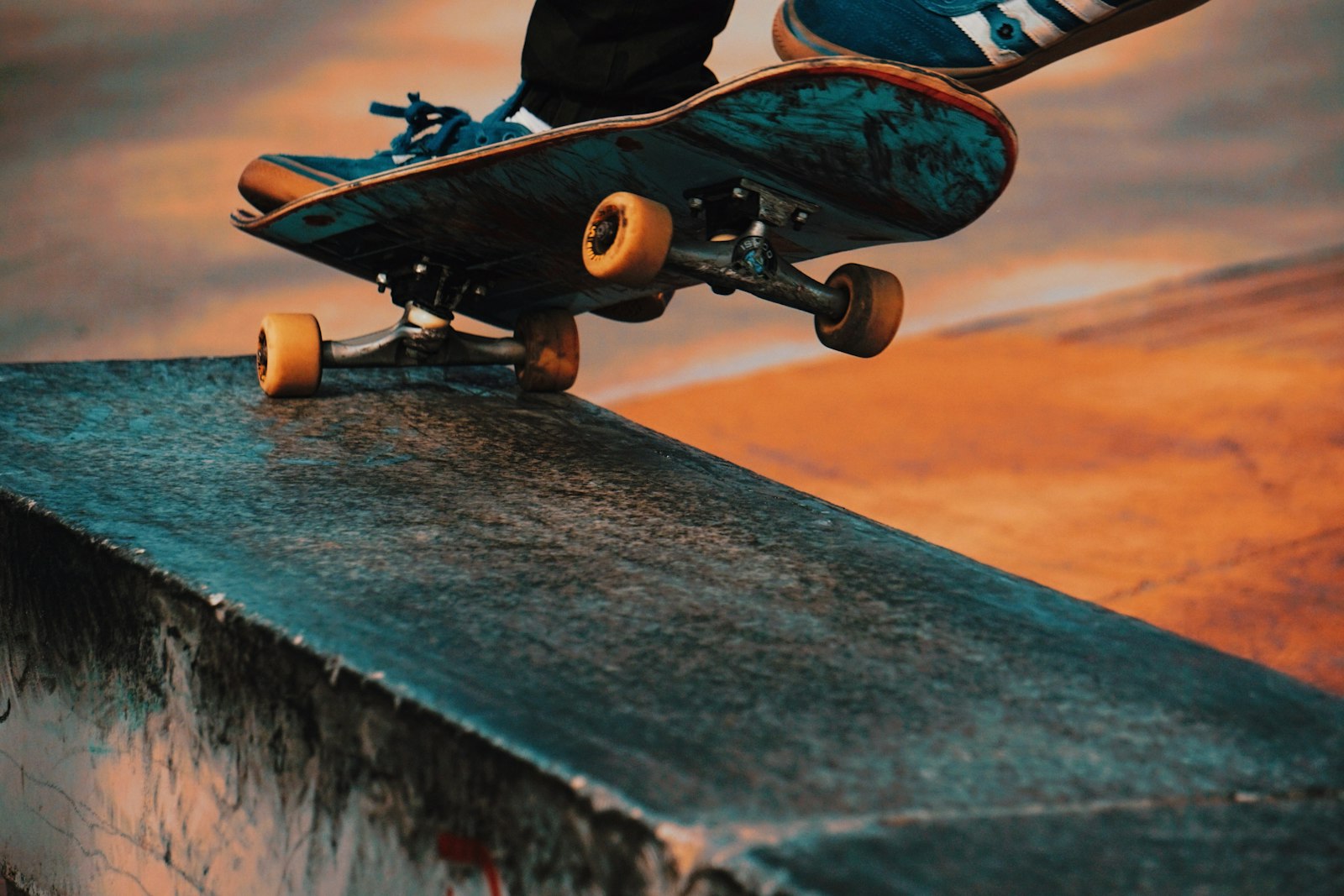
Ricoh GR III Skateboarding Photography: Settings, Tips, and Best Recipes
Skateboarding photography is a discipline of milliseconds. The trick happens once, the light is whatever it is, and the photographer has to be close, fast, and committed. The Ricoh GR III is an unlikely-but-perfect tool for the job: it fits in a hoodie pocket, powers on in under a second, and its 28mm equivalent lens is exactly the focal length skate photographers have used on film for decades. Pair that with Snap Focus, and you have a camera that can keep up with a kickflip in a way most APS-C bodies cannot.
This guide covers the camera settings, Snap Focus distances, preset recipes, and shooting techniques that will help you bring back keepers from every skate session with the GR III.
Why the GR III Works for Skateboarding
A few things make the GR III specifically suited to skate photography rather than just photography in general:
- 28mm equivalent field of view matches the wide, immersive perspective that defines classic skate photography from the early 2000s onward
- Snap Focus bypasses autofocus entirely so the camera fires the instant you press the shutter, with no lag waiting for AF lock
- APS-C sensor in a pocketable body means you can hop curbs, drop into bowls, and ride along without a bag full of gear
- Leaf shutter quietness and fast startup let you grab candid moments in the parking lot or at the spot without breaking the vibe
- High dynamic range handles the harsh contrast between asphalt shadows and bright skies that defines most skate spots
The GR III's biggest limitation -- no built-in flash on most variants and no hot shoe on the standard body -- is also why most GR III skate shots rely on natural light and ambient looks rather than the flashed, frozen-mid-trick aesthetic of high-end skate magazines. Lean into that. The GR III is for the photographer who is part of the crew, not the dedicated shooter on assignment.
Essential Camera Settings for Skateboarding
Shooting Mode: Shutter Priority or Manual
Skateboarding requires control over shutter speed above all else. Use Shutter Priority (Tv) when the light is changing or you are moving spot to spot, and switch to Manual (M) with Auto ISO when you want full creative control of exposure and motion.
Recommended starting shutter speeds:
- 1/1000s or faster to freeze tricks completely sharp -- the board, the truck, the laces
- 1/500s as a safe minimum for most flips, grinds, and ollies
- 1/250s for cruising, pushing, lines, and lifestyle shots where some motion blur reads natural
- 1/60s with intentional panning for the classic streaked-background "speed shot" of a skater rolling past
Aperture for Depth and Distance
Skate photography traditionally favors a wider depth of field than portraiture. You want the spot to be readable -- the curb, the rail, the graffiti behind the skater -- so the photo tells a story.
- f/5.6 is the sweet spot for most skate shots, giving deep focus and forgiving Snap Focus distance
- f/8 for daylight bowls and park shots where you want everything sharp from foreground to background
- f/2.8 only when you want shallow depth for a portrait of a skater or board detail
The GR III lens is sharp from f/4 onward and resolves beautifully at f/5.6-f/8, which is also where Snap Focus has the most working distance.
ISO Configuration
Outdoor skate sessions usually offer plenty of light, but you will often be shooting in shadow under bridges, in skateparks with overhangs, or as the sun drops behind buildings.
- Set base ISO to 200 and let Auto ISO climb as needed
- Maximum Auto ISO of 3200 is a good ceiling -- the GR III is clean up to 1600 and usable to 3200
- Minimum shutter speed of 1/500s in your Auto ISO settings ensures the camera prioritizes freezing motion over keeping ISO low
For night skating in spots lit by street lamps or shop windows, manually pushing ISO to 3200 or even 6400 is fair game -- the noise gives the shot a gritty, true-to-life feel that suits skate culture.
Snap Focus: The Single Most Important Setting
Snap Focus is what makes the GR III a legitimate skate camera. By pre-setting a fixed focus distance, you eliminate the half-second of autofocus hunt that costs you almost every trick attempt.
Access it via MENU > Snap Focus Distance. Recommended distances by shot type:
- 1.5m for close-up grinds, board tweaks, and detail shots
- 2.5m for most flatground tricks, ollies, and curb-height moments where you are within a couple of steps
- 3.5m for ramps, mid-distance lines, and rail tricks
- 5m for wider stage-style shots where you want the spot and the skater together
- Infinity for skyline lines and architecture-driven skate shots
To activate Snap Focus on the fly, set your focus mode to AF and use the Full Press Snap function: a quick full press of the shutter fires at the Snap Focus distance regardless of AF state. This is the key to bag-of-tricks GR III shooting -- you can leave the camera in AF for setup shots and trigger Snap on demand for the actual trick.
For more advanced users, set the camera to MF (manual focus) with the focus ring locked at your chosen Snap distance. This guarantees zero focus delay and zero autofocus surprises.
Drive Mode: Burst at Just the Right Moment
The GR III's burst rate is modest, but it is plenty for skateboarding when timed well. Use Continuous H at about 4 fps to capture the takeoff, apex, and landing of a trick in a short burst. Pre-fire just before the skater pops, hold through the trick, and release after the landing.
Avoid spraying full bursts every attempt -- you will fill the buffer and miss the next try. Three to five frames per attempt is the sweet spot.
Metering and Exposure Compensation
Skate spots are notoriously high-contrast. Bright asphalt, dark hoodies, glaring noon sun, and deep concrete shadows all in the same frame.
- Center-weighted metering is the most predictable choice for skate work since the skater is usually somewhere central in the frame
- +0.3 to +0.7 EV exposure compensation when the skater is wearing dark clothes against bright pavement
- -0.3 to -0.7 EV in flat overcast light to retain texture in the sky and avoid washed-out concrete
Check your histogram often. Clipping the highlight on a bright sky is rarely a problem in skate photography (sky is rarely the subject), but losing the shadow detail on the skater's face or board is fatal.
Best Preset Recipes for Skateboarding
Concrete and Chrome
A neutral, slightly contrasty look that matches the materials of most skate spots. Set Image Control to Standard, push Contrast to +2, Saturation to 0, and Sharpness to +1. Use Daylight white balance for consistency across the session. This recipe renders asphalt with texture, denim with depth, and metal rails with the slight glint that makes a grind shot read clearly.
Thrasher Black and White
Channel the look of skate magazines past. Set Image Control to Hard Monotone, Contrast to +3, and Shadow Adjustment to -1 for deep blacks. Enable Grain Effect at Medium. The result is high-contrast, gritty, and timeless -- ideal for trick photos where you want the form of the board and skater to dominate without color distractions.
VX Camcorder
Skate video culture lives on the look of the Sony VX1000 camcorder -- saturated, slightly soft, slightly desaturated reds and blues with crushed shadows. Set Image Control to Positive Film, Saturation to +1, Contrast to +2, and Sharpness to -1. This recipe gives still photos the same nostalgic flavor as the video footage your friend is shooting alongside you.
Sun-Bleached Park
For sunny outdoor sessions and rooftop spots. Set Image Control to Bleach Bypass, Contrast to +2, and Saturation to -1. The desaturated, slightly silvered look mimics the way harsh midday sun bleaches color from concrete and street surfaces. Pair it with CTE white balance to subtly warm the asphalt tones.
Golden Hour Lines
When the sun drops and lights up the spot from the side, this recipe makes the most of it. Set Image Control to Vivid, Saturation to +1, Contrast to +1, and use Shade white balance to push the warmth. Lines shot in this light with long shadows from skaters and obstacles look cinematic with almost no editing.
Night Skate Neon
For late sessions under shop signs and street lamps. Set Image Control to Standard, Contrast to +2, Saturation to +2, and High ISO Noise Reduction to Off -- you want the grain. Use Tungsten white balance to cool the orange streetlight into something more cinematic. This recipe leans into the gritty, after-hours feeling of urban skating.
Techniques for Better Skate Photos
Get Low
The single biggest upgrade most skate photos can get is a lower camera position. Crouch, kneel, or lay the GR III on the ground and shoot using the rear screen. Low angles emphasize the height of the trick, the scale of the obstacle, and the geometry of the spot. The GR III's compact body makes ground-level shooting effortless -- no tripod, no flipping screen needed for most angles.
Pick Your Spot Before the Trick
Talk to the skater. Know where they are popping, which way they are going, and what side they want shot from. Pre-frame the shot, set your Snap Focus distance to match where the trick will happen, and wait. A skater will land a trick 5-20 times in a session -- your job is to be ready every time, not to chase the action.
Shoot Lines, Not Just Tricks
A "line" -- a continuous sequence of tricks down a street or through a park -- is the skate photographer's secret weapon. Shoot the skater pushing, the setup, the trick, and the roll-away as separate frames. A four-frame sequence tells a story that a single hero shot cannot. The GR III's wide field of view and quick startup makes it ideal for this style of shooting.
Embrace the Spot
The location matters as much as the trick. Frame so the curb, rail, ledge, or transition is clearly readable in the photo. A nollie heel over a fire hydrant tells you what the trick is; the same trick photographed against a blank background does not. Skate photography is fundamentally about the interaction between skater and architecture.
Use Vertical Compositions for Ollies and Airs
The GR III is fast to rotate, and many tricks read better in portrait orientation. Airs out of bowls, high ollies over obstacles, and rail drops all benefit from vertical framing that emphasizes height. Don't lock yourself into landscape just because that's what the screen defaults to.
Time the Apex
The apex of a trick -- the highest point where the board and skater are most extended -- is almost always the best frame. With burst mode, you will catch it within three or four frames. Without burst, develop the timing by watching dozens of attempts and learning when each trick peaks. Skaters are remarkably consistent -- once you know when they pop, you know when to fire.
Shoot Wide and Close
Resist the temptation to step back for "more skater in the frame." The 28mm GR III lens is meant to be used inside the action. Step in until the front truck of the board nearly reaches the edge of the frame at the moment of the trick. This is how skate photographers from Atiba Jefferson to Ben Colen have shot iconic photos for years -- the GR III gets you that look without a fisheye and without dragging an SLR rig.
Common Skate Photography Mistakes to Avoid
Relying on autofocus. AF will hunt at exactly the wrong moment -- as the skater is popping into the air, the camera will decide to refocus on the background. Snap Focus solves this entirely. Use it.
Shooting too far away. A skate photo where the skater is small and centered with empty space around them is almost always weaker than the same trick shot from three feet closer. Move your feet, not your zoom (the GR III doesn't have one anyway).
Forgetting to shoot the in-between moments. The candid lifestyle shots -- the kickback at the spot, the bandage on the elbow, the laces being tied -- are often more memorable than the trick shots. Keep shooting between attempts.
Underexposing dark clothing. Skaters tend to wear black, navy, and dark grey. In bright sun, the camera will underexpose them trying to protect the highlights on the pavement. Dial in positive exposure compensation or bias toward the skater in your metering.
Burning through battery. The GR III's battery life is famously modest -- around 200-250 shots per charge. Carry at least one spare for a full session. Turn off image review or set it to two seconds to save power.
Treating skating like sports. Skate photography is closer to street photography than sports photography. You are not capturing a competition from the sidelines -- you are inside the session, part of the moment. The GR III enforces that mindset by virtue of being small and intimate.
Planning Your Skate Sessions
Scout spots before sessions when possible. Note the direction of the light through the day, where shadows fall, what obstacles exist, and what backgrounds make for clean compositions. Indoor parks and covered ledges offer consistent year-round shooting, while outdoor spots reward photographers who know the golden hour timing at each location.
Pair the GR III with a small wrist strap so you can let go of it instantly when you need to move or skate yourself. A microfiber cloth in your pocket handles the dust, grit, and sweat that come with skate sessions. And keep your card empty -- nothing kills a session like running out of space mid-trick.
Putting It Together
Skateboarding photography with the Ricoh GR III is about being prepared, being close, and being part of the crew rather than a spectator. Set your Snap Focus distance for the spot, dial in 1/1000s and f/5.6 for daylight, pick a preset recipe that matches the mood, and trust the camera to fire the instant you press. The GR III will not out-spec a flagship sports body, but for the photographer who actually rides with their friends and wants the documentary feel that defines great skate photography, nothing fits the role better.
Explore our street and action presets for recipes tuned to skate spots, urban texture, and gritty natural light, or grab a complete preset bundle to cover every shooting condition from sunlit park sessions to neon-lit night skates.
Get a free recipe + 15% off your first order
Our Natural Analog recipe (exact settings for the GR III, GR IIIx and GR IV) and a personal discount code, straight to your inbox.
No spam. Unsubscribe in one click.