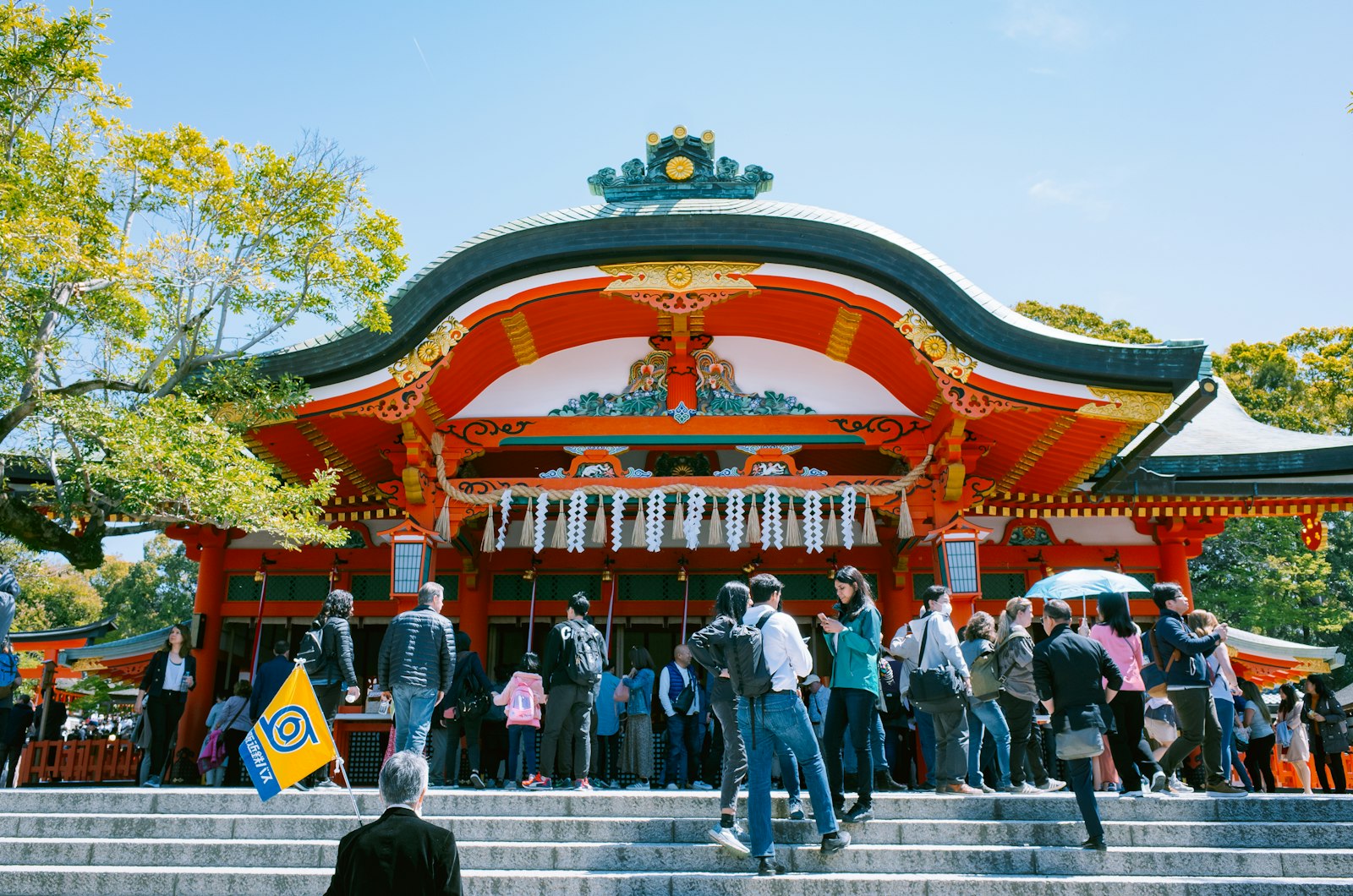
Ricoh GR III Temple & Shrine Photography: Settings, Recipes, and Tips
Temples and shrines are some of the most photogenic subjects you'll ever point a camera at — and the Ricoh GR III was practically built for them. Vermillion torii gates, weathered wooden beams, paper lanterns glowing at dusk, raked gravel zen gardens, incense smoke curling through afternoon light: every element rewards a thoughtful eye and a discreet camera. The GR III is small enough to disappear in your hand, quiet enough not to disturb worshippers, and sharp enough to resolve every grain of cedar in a thousand-year-old beam.
This guide covers the best Ricoh GR III camera settings, custom preset recipes, and respectful composition techniques for shooting temples and shrines — whether you're wandering through Kyoto, exploring a Shinto shrine in your neighborhood, or photographing sacred architecture anywhere in the world.
Why the Ricoh GR III Excels at Temple & Shrine Photography
Before settings, here's why this camera is ideal for sacred spaces:
- Pocketable size lets you carry it through long temple complexes without fatigue and shoot without drawing attention
- 18.3mm (28mm equivalent) lens captures full structures, gates, and gardens without forcing you to back into other visitors
- APS-C sensor preserves shadow detail in dim incense halls and dynamic range in high-contrast courtyards
- Silent electronic shutter respects the meditative atmosphere — essential during ceremonies or quiet meditation halls
- Snap focus delivers instant captures of fleeting moments: a monk walking past, a worshipper bowing, koi rising in a temple pond
- Macro mode lets you photograph carved details, omikuji fortune slips, and stone lantern textures from 6cm away
Essential Camera Settings for Temples & Shrines
Shooting Mode: Aperture Priority (Av)
Temple grounds shift constantly between bright courtyards, dim main halls, and dappled forest paths. Aperture Priority lets the camera adapt to changing light while you control depth of field and creative intent.
Aperture choices for different temple subjects:
- f/2.8 - f/4 for low-light interiors, intimate details, and isolating subjects against busy backgrounds
- f/5.6 - f/8 for architectural shots where you want the full structure sharp from gate to roofline
- f/8 - f/11 for sweeping garden compositions, especially when including stone bridges, ponds, and distant pagodas
ISO Configuration
Sacred spaces span huge dynamic range — from blazing Kyoto noon to incense-dim inner sanctums:
- Auto ISO 200-3200 with a minimum shutter speed of 1/60s handles 90% of temple shooting
- ISO 100-400 for bright outdoor courtyards and sunny torii approaches
- ISO 800-1600 for covered walkways, lantern-lit corridors, and shaded garden paths
- ISO 3200-6400 for genuinely dark prayer halls — the GR III's grain at high ISO actually complements the mood
Cap Auto ISO at 6400 to keep noise within tasteful limits. Above that, switch to a tripod or rest the camera on a railing.
Focus Settings
Snap Focus at 2.5m is the go-to for candid moments — monks walking, worshippers approaching gates, families ringing bells. Pre-focused and ready, you'll never miss the shot.
Touch AF works beautifully for compositions where the subject sits off-center: a single lantern in the corner, a fortune slip tied to a tree branch on one side of the frame.
Macro mode is essential for the small treasures — woodgrain on a torii pillar, the smooth bronze of a chōzuya water basin, hand-painted ema wooden plaques covered in wishes.
White Balance for Sacred Spaces
The light at temples and shrines is unusually mixed: warm tungsten lanterns inside, cool open shade outside, golden afternoon sun streaming through cedar groves:
- Auto White Balance (AWB) is the safe, neutral default and works well in mixed daylight
- Cloudy (6500K) warms up overcast garden shots and brings out the russet tones of temple wood
- Shade (7500K) adds warmth to deeply shaded approaches and forest temples
- CTE (Color Temperature Enhancement) intensifies the vermillion of torii gates and the gold of altar fittings — use deliberately
- Manual Kelvin 4500K for evening or interior lantern light when you want to preserve the warm atmosphere without it going orange
Best Preset Recipes for Temple & Shrine Photography
1. Cedar & Vermillion — Classic Torii
Tuned for the iconic shot: a row of red torii gates against weathered wood and green moss. This recipe pushes red saturation without crushing detail in the dark cedar beams.
- Image Control: Vivid
- Saturation: +2
- Hue: +1
- High/Low Key: 0
- Contrast: +1
- Contrast (Highlight): -1
- Contrast (Shadow): +1
- Sharpness: +2
- Shading: +1
- Clarity: +2
- White Balance: Cloudy (6500K)
- ISO: Auto (200-1600)
- Aperture: f/5.6 - f/8
The Cloudy white balance warms the wood and intensifies the red, while +1 hue shifts vermillion toward its most cinematic tone. The mild shading boost protects edge sharpness in long gate corridors.
2. Incense & Lantern — Interior Hall
For dim main halls lit by paper lanterns, candles, and the occasional shaft of daylight through a doorway. Leans into shadow and warm tones for a contemplative, almost painterly result.
- Image Control: Positive Film
- Saturation: +1
- Hue: 0
- High/Low Key: -2
- Contrast: +2
- Contrast (Highlight): 0
- Contrast (Shadow): -2
- Sharpness: +1
- Shading: +2
- Clarity: +1
- White Balance: Daylight (5200K)
- ISO: Auto (800-6400)
- Aperture: f/2.8 - f/4
Using Daylight white balance under tungsten lanterns intentionally preserves that golden glow rather than correcting it away. The deep shadows hold incense smoke beautifully.
3. Zen Garden — Monochrome Stone & Gravel
A high-contrast black-and-white recipe built for raked gravel patterns, mossy stones, and bonsai-shaped pines. Strips out color noise so form and texture lead the frame.
- Image Control: Hard Monotone
- Saturation: -4 (no effect on monochrome but locks intent)
- Hue: 0
- High/Low Key: +1
- Contrast: +2
- Contrast (Highlight): -1
- Contrast (Shadow): +1
- Sharpness: +3
- Shading: +1
- Clarity: +3
- Toning (B): +1 (cool blue tone) or Toning (A): -1 (subtle warm tone)
- White Balance: AWB
- ISO: Auto (200-1600)
- Aperture: f/8 - f/11
Maximum clarity reveals the geometric beauty of raked gravel and the texture of weathered granite lanterns. A touch of cool toning evokes the cool restraint of Zen aesthetics; switch to warm toning for a more nostalgic feel.
4. Festival Lantern Night — Evening Shrine
Designed for evenings: matsuri festivals, illuminated lanterns lining a path to the main hall, or the soft glow of a shrine just after sunset.
- Image Control: Standard
- Saturation: +2
- Hue: +1
- High/Low Key: -1
- Contrast: +1
- Contrast (Highlight): -2
- Contrast (Shadow): 0
- Sharpness: +2
- Shading: +2
- Clarity: +2
- White Balance: Manual Kelvin (4500K)
- ISO: Auto (800-6400)
- Aperture: f/2.8
Lowered highlight contrast protects lantern detail from blowing out. The mid-warm Kelvin keeps the scene atmospheric without going overly orange. Shoot wide open and let the GR III's lens render lantern bokeh into soft warm orbs.
Composition Techniques for Temples & Shrines
Frame Through the Torii
The classic shot: stand far enough back that a torii gate frames the path, hall, or distant pagoda behind it. The gate becomes a natural border, drawing the eye through the frame and adding immediate context. The GR III's 28mm field of view is ideal — wide enough to include the full gate without distorting it.
Symmetry on the Central Axis
Most temple complexes are built along a central axis: the path from the outer gate runs dead-center to the main hall. Stand on this axis and shoot symmetrically. The 28mm lens preserves straight lines beautifully, and centered symmetry communicates the formal balance these spaces were designed to express.
The Diagonal of a Wooden Beam
Old temple wood is a gift to photographers. Find a beam, railing, or sliding door that runs diagonally through your frame and use it as a leading line. Pair this with a worshipper, lantern, or small detail at the line's destination.
Reflection in a Chōzuya Basin
The chōzuya (ritual water basin) at shrine entrances is a beautiful photographic subject in its own right. Drop your angle low to catch a reflection of the shrine roof or sky in the water. The macro mode lets you fill the frame with ladles, droplets, and stone texture.
Small Details Tell Big Stories
Don't only shoot the wide architectural views. The story of a temple lives in the small things:
- Ema (wooden prayer plaques covered in handwritten wishes)
- Omikuji (fortune slips tied to trees and rope frames)
- Komainu (guardian lion-dog statues at shrine entrances)
- Roof tiles, especially ridge-end ornaments and dragon details
- Hands — clasped in prayer, ringing a bell, dropping a coin into the offering box
- Incense smoke drifting in a sunbeam
- Worn stone steps smoothed by centuries of footsteps
These details, woven between your wide shots, create a complete sense of place.
Cultural Etiquette: Shoot Respectfully
Temples and shrines are working religious sites. Beautiful photography and respectful behavior are not in conflict — they reinforce each other.
- Look for "No Photography" signs. Many inner sanctums, altar areas, and Buddha statues are explicitly off-limits. Always check before lifting the camera.
- Never photograph worshippers in prayer at close range. A wide environmental shot from a distance is usually fine; a portrait-style close-up of someone in private devotion is not.
- Don't use flash. It's disruptive, often prohibited, and the GR III handles low light well enough that you'll rarely need it.
- Use silent shutter mode in halls where ceremonies are happening or where signs ask for quiet.
- Don't block paths or step over thresholds while shooting. Many temples treat the raised wooden threshold (genkan) as sacred — never step on it.
- At Shinto shrines, walk on the sides of the main path, not the center — the center is reserved for the kami (deity).
- Ask before photographing monks or priests. Most are gracious if asked respectfully. A small bow goes a long way.
- Pay any required entry fee. Your support keeps these places preserved.
Quick Reference Cheat Sheet
| Scenario | Aperture | ISO | WB | Best Recipe |
|---|---|---|---|---|
| Torii gate corridor | f/5.6-f/8 | 200-800 | Cloudy | Cedar & Vermillion |
| Dim main hall interior | f/2.8-f/4 | 1600-6400 | Daylight | Incense & Lantern |
| Zen rock garden | f/8-f/11 | 200-800 | AWB | Zen Garden Mono |
| Pagoda from a distance | f/8 | 200-400 | AWB | Cedar & Vermillion |
| Evening lantern path | f/2.8 | 1600-6400 | 4500K | Festival Lantern Night |
| Carved detail close-up | f/2.8 (Macro) | 400-1600 | Cloudy | Cedar & Vermillion |
| Stone guardian statue | f/4-f/5.6 | 400-1600 | AWB | Zen Garden Mono |
| Worshipper at bell | f/4 | 400-1600 | AWB | Incense & Lantern |
Final Tips for Better Temple & Shrine Photos
Arrive at opening time. Most major temples open at 8 or 9 AM. The first hour is magical — soft light, fewer tourists, monks performing morning rituals. By 10 AM, both the light and the crowds have shifted.
Shoot in RAW+JPEG. Mixed temple lighting can fool any meter. The RAW file rescues exposures the JPEG can't, while your preset still gives you an in-camera look to share immediately.
Watch for the moment. A monk pausing on a threshold. Incense smoke crossing a sunbeam. A child reaching up to ring the bell. These moments last seconds. Pre-focus with Snap Focus and stay alert.
Look up — and look down. Temples and shrines reward both. Ceiling paintings, carved transoms, and roof brackets are often gorgeously intricate. Below, smooth stone steps, gravel patterns, and water reflections create their own compositions.
Embrace bad weather. Rain darkens wood to deep umber, brightens moss, and clears the crowds. Snow turns vermillion gates into instant masterpieces. Fog at a mountain temple is the most cinematic light you can ask for.
Be patient with crowds. At famous sites, wait a few minutes — visitors come in waves, and you'll often catch a quiet moment if you give it time. Or use the crowd: a single worshipper centered in a stream of motion blur can be more evocative than an empty hall.
Ready to bring these recipes to your next temple visit? Browse our curated preset collections for one-click looks across every lighting condition, or explore a complete bundle tailored for travel and architectural photography.
Get a free recipe + 15% off your first order
Our Natural Analog recipe (exact settings for the GR III, GR IIIx and GR IV) and a personal discount code, straight to your inbox.
No spam. Unsubscribe in one click.